
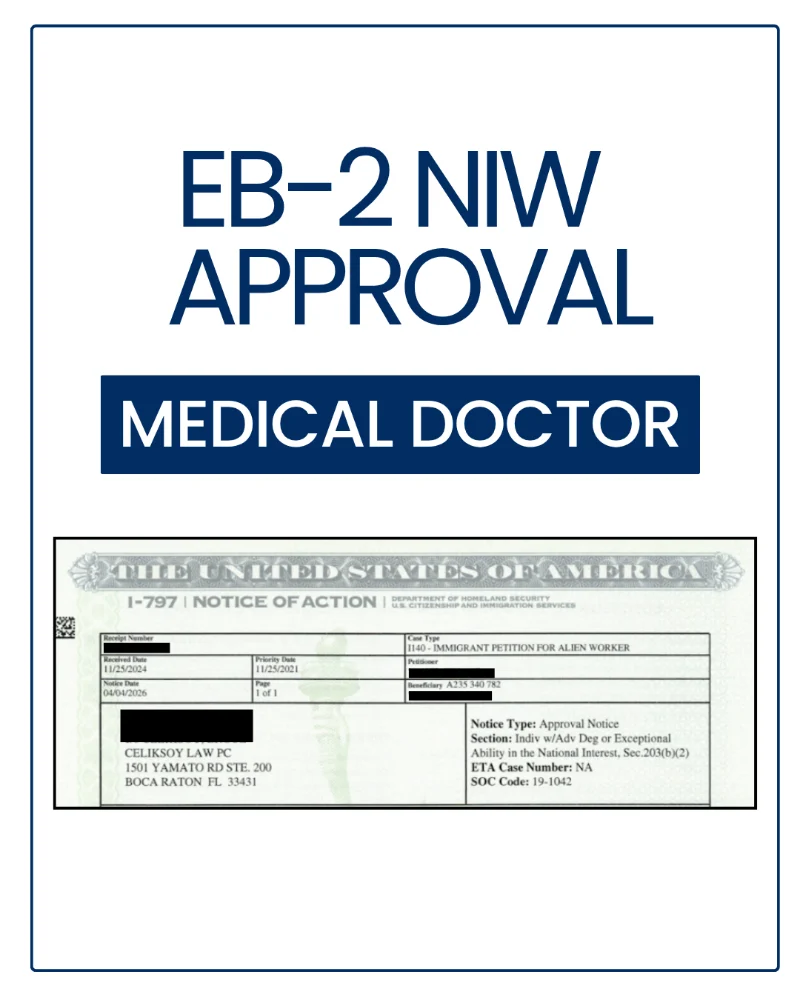
Celiksoy Law secured EB-2 National Interest Waiver approval for a physician whose research focused on advanced imaging and minimally invasive approaches to brain and spine surgery. His petition connected clinical experience, neurosurgical training and a U.S. research appointment with a defined plan to investigate techniques intended to improve surgical precision and preserve healthy tissue.
The applicant was developing his medical and research career. We presented the substance of the experience he had already acquired, the scientific questions he was working on and the documentation supporting his proposed contribution in the United States.
Clinical experience behind the research
After completing medical school, the applicant worked in emergency care and primary care before entering neurosurgical residency training. He subsequently took up a postdoctoral research position in the United States.
These stages provided different forms of preparation. His clinical background gave context to his interest in neurological emergencies and patient management. Neurosurgical training developed his exposure to brain and spinal conditions, while his research appointment provided an institutional setting for further scientific work.
We explained those roles through the professional history described in the petition and the associated education, employment and appointment records. This connected his developing research direction with practical experience in medicine.
Imaging and precision in brain and spine surgery
The proposed endeavor addressed a demanding problem: treating a neurological lesion while protecting nearby structures responsible for movement, sensation and other essential functions. Its focus included minimally invasive approaches to complex brain and spinal conditions and improved management of neurosurgical emergencies.
Advanced imaging was an important part of this plan. The petition described work involving high-resolution MRI and tractography, which maps pathways formed by nerve fibers. Research on brainstem specimens aimed to improve the anatomical information available for understanding these pathways and planning surgical approaches.
The proposed work also addressed tissue imaging during surgery and approaches to spinal cord tumor removal. These activities were presented as research directions with potential clinical relevance. Better visualization and more precise techniques were intended goals; the petition did not establish that the applicant had already delivered nationwide improvements in patient outcomes.
Publications connected to clinical questions
The applicant’s co-authored research examined several concrete neurosurgical problems. One study considered anatomical measurements associated with a structural condition affecting the brain’s posterior region. Another examined surgical and nonsurgical management of epidural hematomas in children and adults. A further study assessed postoperative scarring in lumbar spine surgery.
These studies helped explain the relationship between clinical decision-making and his research interests. They addressed diagnostic assessment, treatment selection and complications following surgery—questions relevant to the proposed direction of his work.
The petition also described case reports and conference presentations concerning complex brain, spine and peripheral nerve conditions. These materials documented scientific communication and participation in collaborative research. An acceptance email for a further advanced-imaging article supported the account of ongoing work, while keeping its publication status clear at the time of filing.
The evidence and its role in the petition
We organized the supporting materials around the applicant’s preparation, research record and intended U.S. work.
| Evidence described in the petition | Its role in the case |
|---|---|
| Medical education and training records | Documented his educational foundation and neurosurgical training. |
| Employment history and U.S. research appointment documentation | Explained his clinical background and the research setting available to advance the proposed work. |
| Proposed endeavor statement | Defined the intended research activities and their potential relevance to neurological care. |
| Co-authored journal articles and case reports | Supported the account of completed scholarly work on brain, spine and peripheral nerve conditions. |
| Conference materials and an article acceptance email | Documented scientific communication and ongoing research, with the different publication stages identified. |
| Journal review records | Supported his experience evaluating other researchers’ work. |
| Specialized courses and research training | Added detail about preparation in neuroanatomy, imaging, microsurgical techniques and research practice. |
| Expert opinion and reference letters | Provided professional assessments of his research, preparation and proposed contribution. |
| Healthcare and research background materials | Supplied context for the petition’s explanation of the endeavor’s wider relevance. |
Presenting the NIW request
Our petition addressed the proposed work’s potential importance, the applicant’s preparation to advance it and the reasons for requesting a waiver of the job offer and labor certification requirements. The explanation focused on the relationship between his documented experience and specific research activities.
Expert letters discussed the relevance of imaging research, the applicant’s scholarly work and his development within neurosurgery. His U.S. research appointment supported the practical context for pursuing the proposed endeavor. Together, these materials allowed us to present a coherent account of his preparation and research direction.
We developed the petition, proposed endeavor description and recommendation letter drafts, and shared materials with the applicant for review. His feedback helped refine the professional descriptions and connect the written explanations with the supporting records.
EB-2 NIW approval
USCIS approved the applicant’s EB-2 NIW I-140 petition. The case illustrates how clinical experience, specialist training and a developing research record can be examined together when preparing a physician’s National Interest Waiver application.
For physicians and researchers considering an EB-2 NIW petition, the proposed work and evidence should be assessed in relation to their own professional background. To discuss your circumstances with Celiksoy Law, contact us@celiksoylaw.com.