
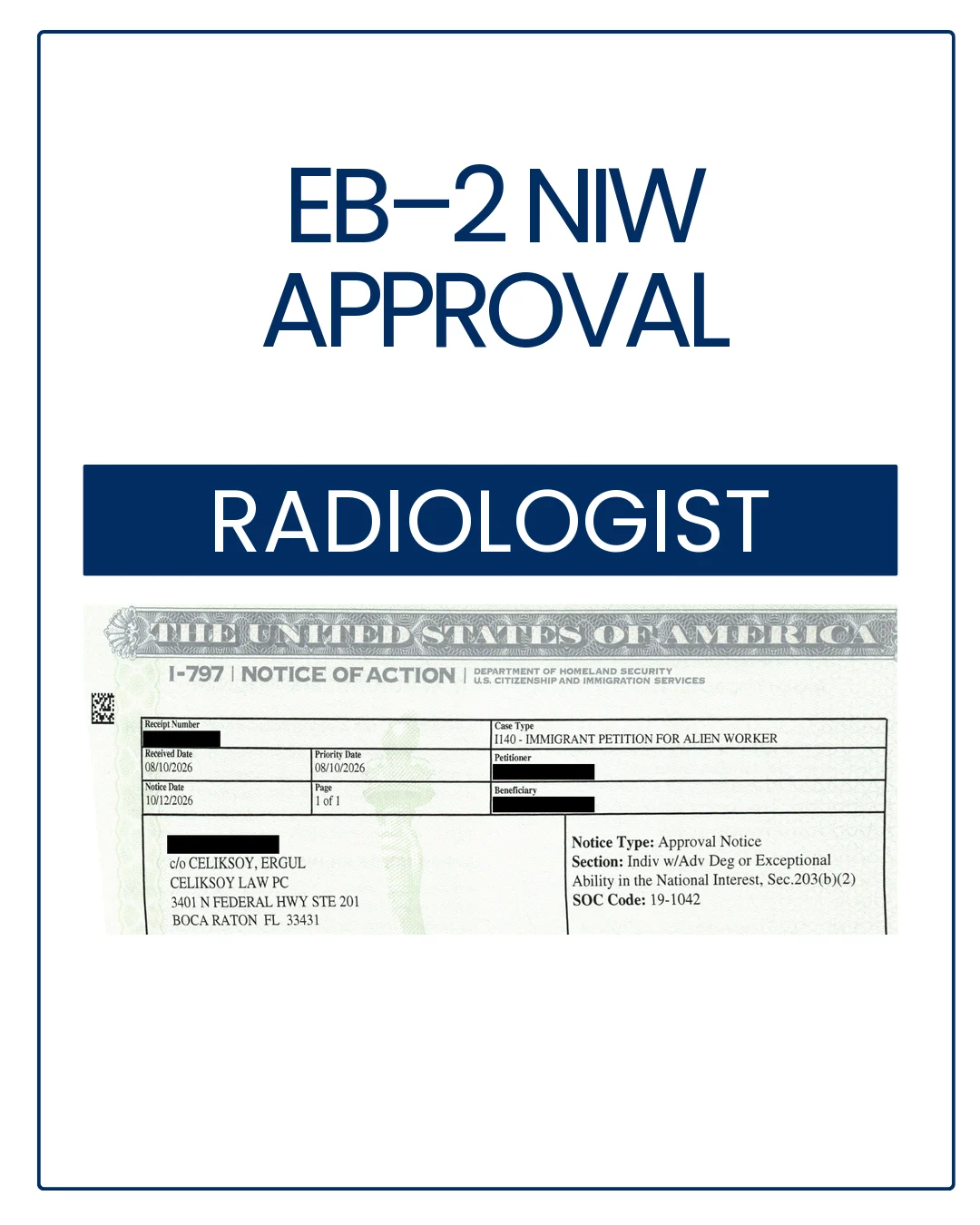
Celiksoy Law secured EB-2 National Interest Waiver approval for a radiologist whose work combines musculoskeletal imaging, diagnostic research and image-guided interventions. The petition connected his clinical experience with a proposed US endeavor focused on improving imaging protocols, supporting earlier diagnosis and expanding access to specialized radiology services.
His record included research on inflammatory hand arthritis, the reliability of shoulder imaging measurements and diagnostic errors. Alongside these publications, the petition described his role in introducing specialized imaging and interventional services at a regional hospital, international training and recognition for scientific presentations.
A proposed endeavor built around diagnostic precision
The proposed work focused on advanced MRI, high-resolution ultrasound and standardized imaging protocols for musculoskeletal conditions. It also addressed image-guided procedures and research intended to improve the consistency of radiological interpretation.
We explained the relationship between these activities. Imaging research can examine which findings help distinguish similar conditions, protocol development can improve how those findings are captured, and clinical collaboration can explore their relevance to patient management. The applicant’s proposed endeavor brought these activities together through research, multidisciplinary work and the development of clinical methods.
The petition presented potential benefits in diagnostic quality, access to specialized care and less invasive treatment pathways. These were the aims of the proposed work, supported by his prior experience and the professional assessments described in the filing.
Hand arthritis research with a defined clinical question
A central research example examined the role of high-resolution MRI in differentiating inflammatory conditions affecting the hand. The prospective study investigated imaging findings that could help clarify diagnoses in early or ambiguous cases.
The applicant was the lead author of the resulting peer-reviewed article. The support letter connected this work with his residency research and a conference presentation, showing a progression from a clinical question to scientific communication and publication.
This research gave the proposed endeavor a specific foundation: experience evaluating an imaging protocol against a diagnostic problem, rather than a broad interest in medical innovation.
Imaging measurements and awareness of diagnostic errors
A separate co-authored study examined the reliability of critical shoulder angle measurements on optimized radiographs compared with zero echo time MRI. It supplied another example of research into how image acquisition and measurement affect diagnostic information.
The applicant also co-authored a review of radiological errors, discrepancies and cognitive bias. Its case-based approach considered how interpretation can go wrong and why awareness of those patterns matters to radiology practice.
The petition used these strands to explain his interest in diagnostic quality: how images are obtained, how measurements are made and how findings are interpreted. Publication and citation materials added context to the scholarly record. We kept the applicant’s own work distinct from later research that cited it, including work involving artificial intelligence.
Experience introducing specialized services at a regional hospital
The clinical account described more than routine reporting duties. According to the support letter and the hospital supervisor’s assessment quoted within it, the applicant helped establish musculoskeletal ultrasound and image-guided intervention services at a regional hospital in Türkiye.
The filing also described liver MRI protocol development and preoperative localization of small breast lesions. The supervisor explained how these activities expanded the services available locally and reduced the need for some referrals to larger centers.
We connected this experience with the proposed focus on access to specialized imaging. It provided a practical example of introducing methods into a clinical setting where they had previously been less accessible. The account supported his capacity to work with clinicians, implement protocols and develop services alongside his research.
International training and professional recognition
The applicant completed medical education and radiology specialty training in Türkiye and held the European Diploma in Radiology. His international experience included a visiting training program in emergency and trauma imaging in the United Kingdom.
The petition described participation in multidisciplinary meetings, emergency imaging discussions and teaching activities during that training. A supervisor’s assessment supplied context about his technical preparation, professional development and ability to work within a demanding clinical environment.
Certificates of Merit for educational presentations at RSNA and ECR congresses added a further part of the record. The filing also identified scientific presentations, professional development activities and journal peer review. These materials supported different aspects of his preparation and professional engagement and were presented alongside the research and clinical experience relevant to the proposed endeavor.
Connecting the record to the national interest argument
Our presentation organized the case around the work the applicant intended to advance and the evidence supporting his ability to pursue it. His medical and specialty qualifications addressed the professional foundation. Research, clinical service development, international training and expert assessments explained his preparation for the proposed activities.
The national interest argument focused on the potential reach of imaging methods, diagnostic knowledge and research beyond an individual employment position. The petition also explained why waiving the job offer and labor certification requirements would benefit the United States in the circumstances of this case.
That approach allowed the scientific and clinical record to serve a coherent purpose. Each group of evidence was connected to the proposed work, rather than presented as an isolated achievement.
EB-2 NIW approval supported by a connected professional record
USCIS approved the applicant’s EB-2 NIW I-140 petition. The case brought together research on diagnostic questions, experience developing clinical services and a defined plan for continuing work in imaging and image-guided interventions.
For physicians considering an NIW petition, this case illustrates the value of explaining what their achievements support: the work they intend to pursue, their preparation for it and its potential significance beyond a particular role.
Celiksoy Law advises physicians and researchers on presenting their experience and proposed US work in EB-2 NIW petitions. Contact our team to discuss your background and plans.