Our client’s research connects the propagation of individual plant species with the planning of entire landscapes. During her master’s studies, she developed tissue culture methods for a native crocus species that had proved difficult to cultivate. Her doctoral research expanded to botanical fieldwork and GIS mapping, examining how native plant diversity could support sustainable tourism and conservation. Alongside these studies, she accumulated 12 years of academic research experience in the Department of Landscape Architecture at Karadeniz Technical University.
Our firm presented this combination of laboratory research and landscape analysis as the foundation for her proposed work in the United States. The petition detailed her plans to use spatial modeling to assess urban heat risks and identify suitable locations for green infrastructure, while developing propagation methods for resilient and ecologically valuable plants. Her completed research projects, scholarly publications, and conference presentations supported our argument that she was well-positioned to advance an endeavor addressing urban resilience, biodiversity conservation, and sustainable land use.
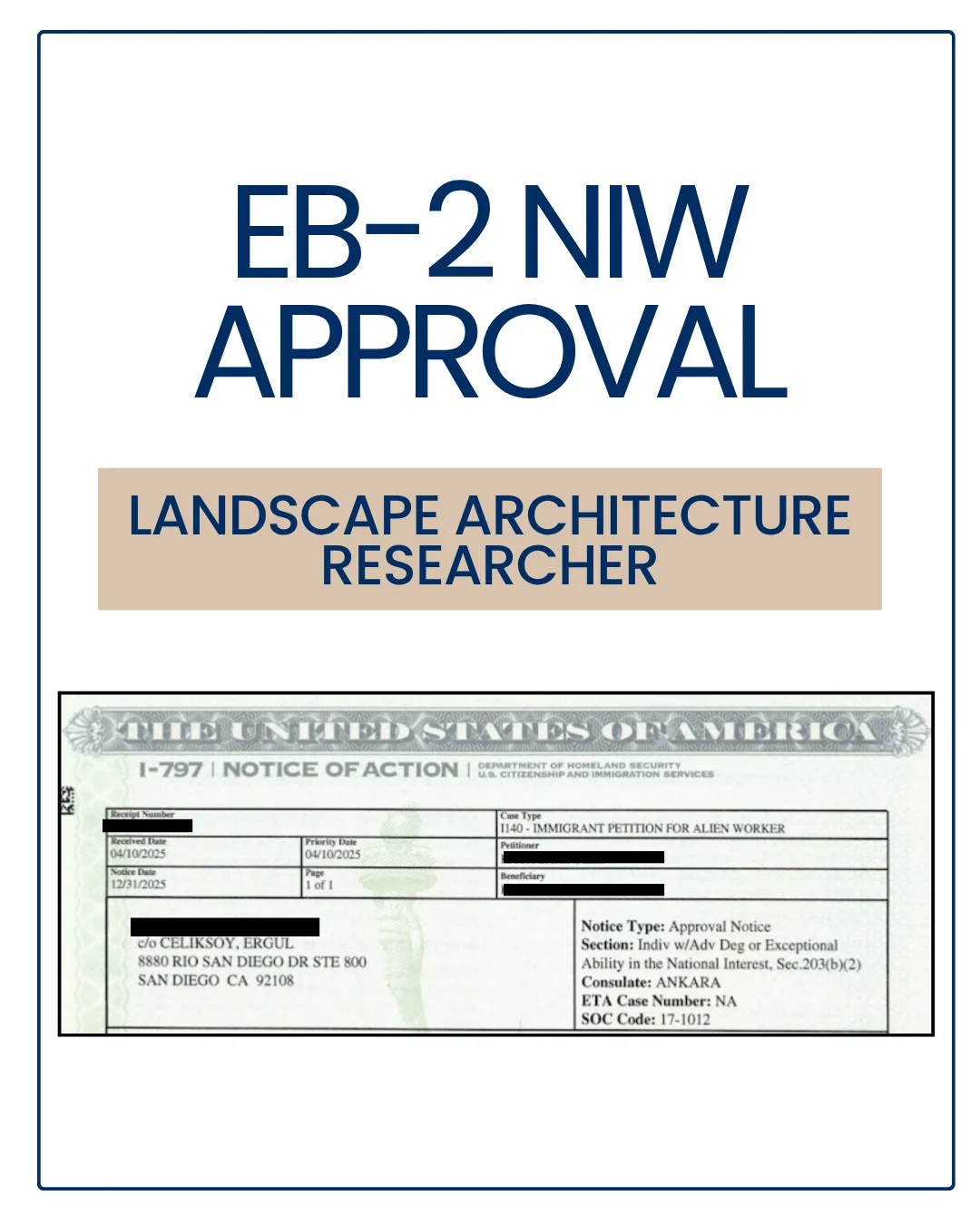
For this client, the proposed contribution brings together two practical questions: where green spaces can provide the greatest environmental benefit, and how to produce the plants best suited to those locations. Her plans apply that approach to urban parks, green roofs, and restoration projects, with the aim of reducing heat stress and conserving resources. USCIS approved her I-140 petition under the EB-2 National Interest Waiver category, advancing her immigration plans as she seeks to pursue this work in the United States.