
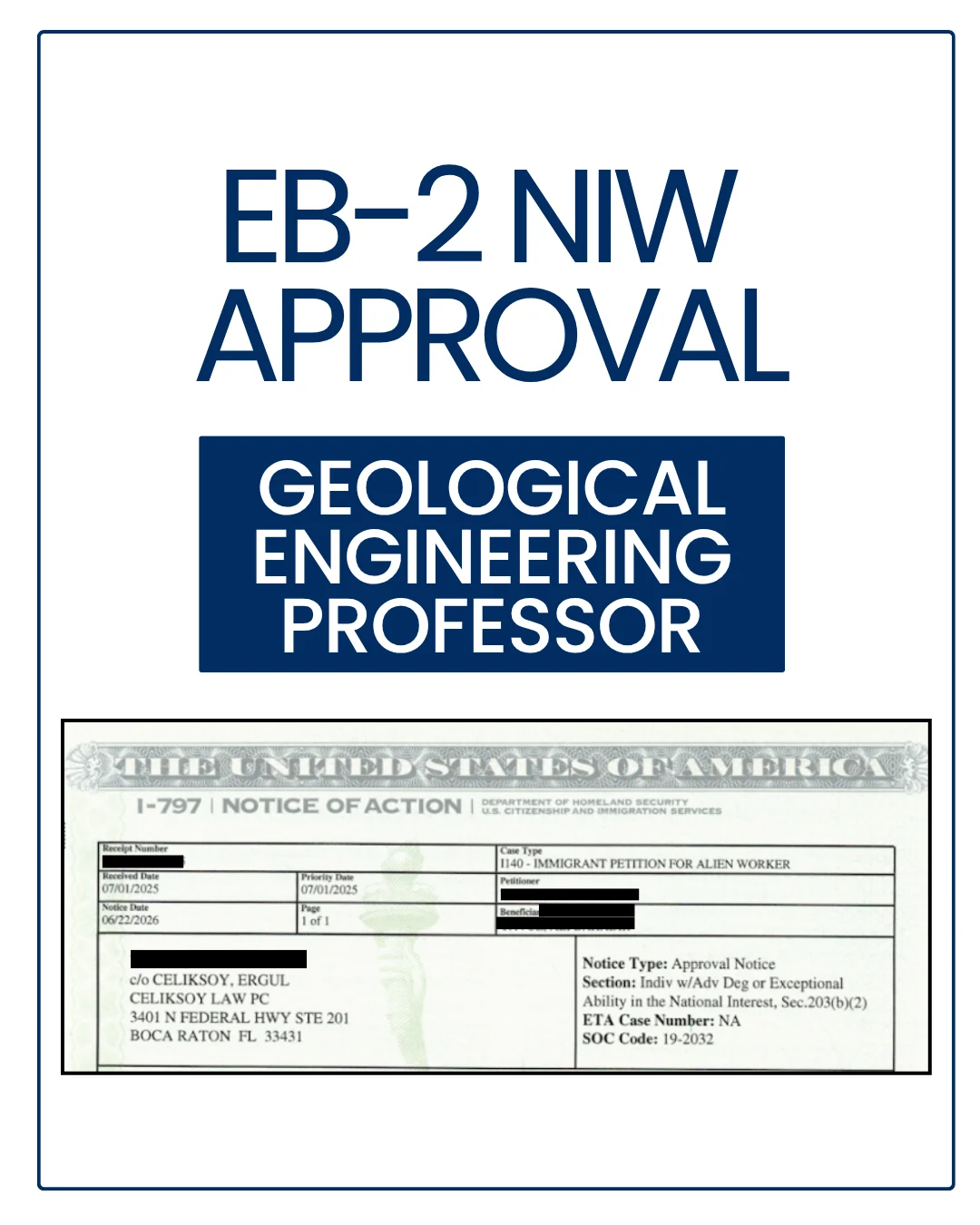
Celiksoy Law secured EB-2 National Interest Waiver approval for a geological engineering professor specializing in natural stone durability and construction materials. His petition connected laboratory testing, field investigations and previous U.S. research experience with a proposed endeavor to improve material evaluation for infrastructure.
The case centered on a practical question: how can engineers assess whether a stone will withstand its intended environment? We explained how his research on deterioration, mechanical properties and material classification provided a foundation for further work on that question in the United States.
Stone durability under environmental stress
The applicant held a degree in geological engineering and graduate degrees in applied geology. His early research investigated the engineering properties of marble and the geological factors affecting quarry production. These studies established experience examining materials from their source through to their suitability for construction.
His subsequent publications addressed different forms of deterioration. A co-authored study examined the engineering properties of fire-exposed marble columns. Another investigated how temperature changes and salt crystallization affect marble, while a separate study assessed volcanic building stone under salt, freeze–thaw and wetting–drying conditions.
We used these examples to explain the substance of his expertise. They showed experience investigating how stone characteristics and environmental exposure interact, a central issue in the proposed research on long-term material performance.
Making material testing more informative
His research also addressed testing methods. One study examined how sample shape and size affect a test of rock disintegration. Another explored a modified durability index incorporating compressive strength, abrasion resistance and water absorption.
These publications supported the proposed work on diagnostic tools and predictive methods. We explained how reliable measurements and meaningful classification could inform construction material decisions.
His funded project experience added a computational dimension. The petition described his participation in research using digital image processing and artificial neural networks to classify geological materials. It also documented projects examining limestone suitability, natural stone properties and quarry production.
Academic leadership and previous U.S. research
The applicant’s career included progression through academic roles to a full professorship, alongside teaching, graduate supervision and research. Employment and professorship records supported this account, while project documentation distinguished his work as principal investigator, collaborating researcher and academic advisor.
A previous visiting research period in the United States provided particularly relevant experience. The petition described work on recycled concrete aggregates for highway construction in experimental programs funded by a transportation authority. Invitation letters and a postdoctoral fellowship record supported the account of that research period.
We presented this experience as a connection between his geological materials background and transportation research. It added a concrete U.S. research setting to the record supporting his proposed activities.
Stone research and cultural heritage
His scholarship also included identifying the geological origins of historical marble. Collaborative studies combined field sampling, petrographic analysis and other characterization methods to help distinguish stone sources used in ancient architecture.
This work added another application of material characterization. Understanding a stone’s origin and properties can inform the selection of compatible materials for restoration. The petition connected that expertise with the proposed use of durability assessment in historic building conservation.
Media coverage of his research, an advisory appointment concerning a heritage site and a council role in an international scholarly association supplied additional context. We described these roles separately from ordinary professional memberships and from his publication record.
The proposed U.S. infrastructure endeavor
The intended work combined field surveys, laboratory testing and predictive modeling to assess natural stone performance. It included investigating how temperature variation, moisture and mechanical loading affect materials used in transportation networks, public facilities and coastal engineering.
The plan proposed refining methods for classifying stone and selecting materials suited to particular conditions. It also addressed responsible sourcing and the use of natural or recycled resources. Potential benefits included longer service life, reduced replacement needs and more efficient use of construction materials.
We connected those aims to his completed studies and project experience. The intended infrastructure and restoration applications defined the future direction of the work; the research record explained his preparation to pursue it.
The evidence and its role in the petition
The evidence groups described in the support letter served different purposes, from establishing academic qualifications to explaining the proposed research and its practical context.
| Evidence described in the petition | Its role in the case |
|---|---|
| Degree records, transcripts and thesis materials | Supported his advanced academic preparation and research in applied geology and natural stone properties. |
| Employment verification and professorship certificate | Documented academic progression, teaching and research responsibilities. |
| Visiting researcher invitations and fellowship record | Supported the account of previous U.S. research experience involving construction aggregates. |
| Proposed endeavor statement | Defined the intended durability testing, modeling and material selection activities. |
| Journal publications | Explained specific work on stone deterioration, testing methods and material characterization. |
| Research profile and citation record | Provided context about scholarly engagement with his published work. |
| Funded project and technical report records | Distinguished research leadership, collaboration and advisory contributions to geological materials studies. |
| Journal review and academic evaluation records | Supported his experience assessing other researchers’ work. |
| Conference, media and professional appointment records | Added evidence of scientific communication, public coverage and relevant professional responsibilities. |
Connecting the research record to the NIW request
Our petition explained the proposed endeavor’s merit and wider importance, the applicant’s preparation to advance it and the reasons for requesting a waiver of the job offer and labor certification requirements.
We linked his research methods with potential infrastructure uses. Academic records established his background, publications and project materials explained his completed work, and the endeavor statement defined how he intended to build on it.
EB-2 NIW approval
USCIS approved his EB-2 NIW I-140 petition. The case illustrates how specialized geological research can be presented through its relevance to material selection, infrastructure durability and restoration.
For engineers and academics considering an EB-2 NIW petition, the assessment should connect their own research with a defined U.S. endeavor and supporting evidence. To discuss your background with Celiksoy Immigration Lawyers, contact us@celiksoylaw.com.