
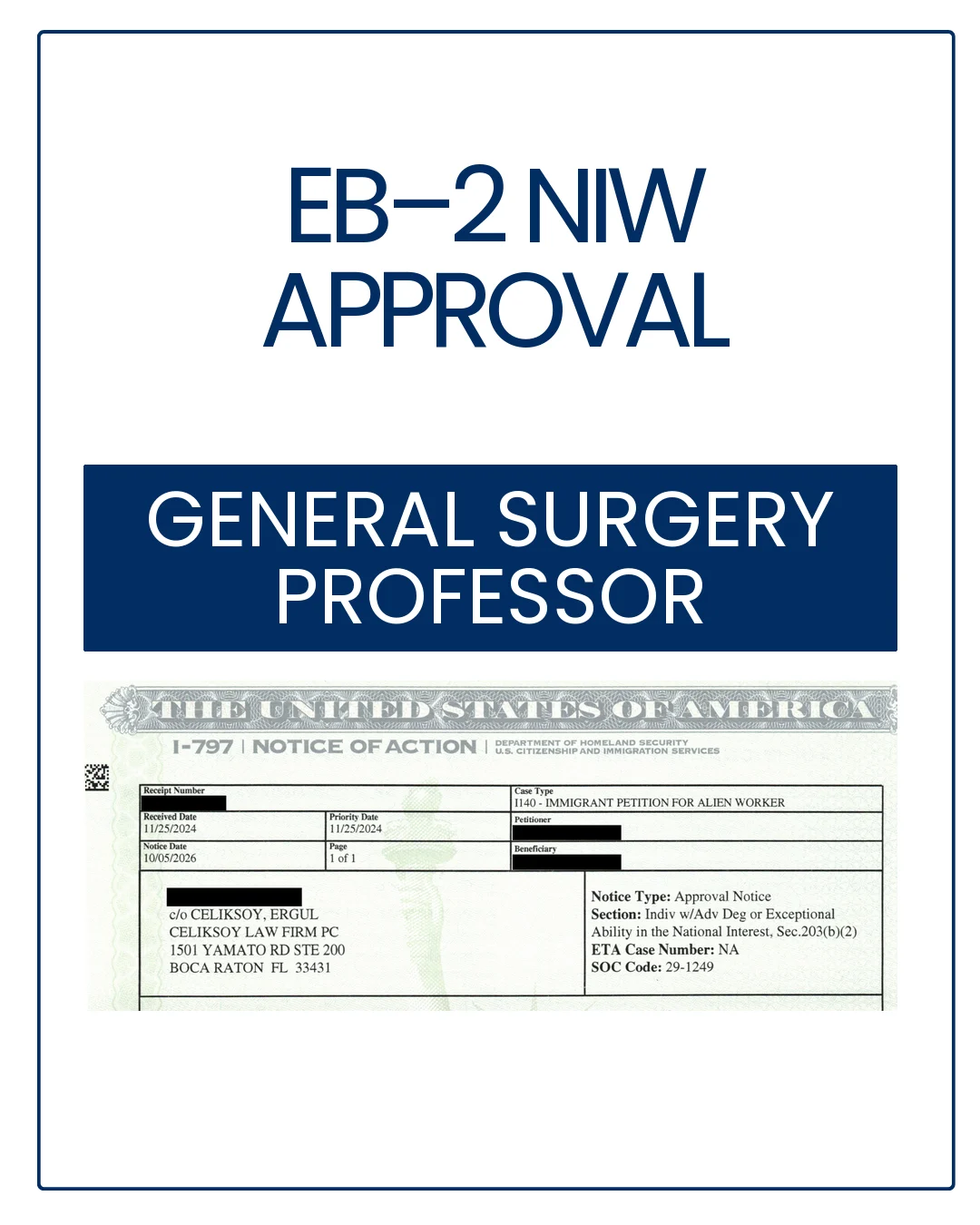
Celiksoy Law secured EB-2 National Interest Waiver approval for a general surgery professor whose record combined clinical practice, surgical research and medical education. His petition connected that experience with plans to continue research, collaborate with other specialists and contribute to surgical knowledge in the United States.
The case included publications on metabolic surgery, diabetic foot wound management and breast cancer pathology. University appointments, teaching responsibilities and journal reviewing added context about how he developed and shared his expertise throughout his academic career.
Metabolic surgery research with a practical clinical focus
One research example compared blood glucose outcomes following different laparoscopic procedures in patients with type 2 diabetes. The study retrospectively assessed metabolic surgery approaches over a follow-up period, providing a specific example of the applicant’s work on treatment outcomes.
We used this publication to explain the connection between surgical practice and clinical investigation. It showed experience examining how alternative procedures performed against a defined question, supporting the account of his preparation for further surgical research.
The petition’s wider research record also included work on sleeve gastrectomy and subsequent citations in metabolic surgery literature. These materials helped place the study within a continuing area of scientific interest.
Diabetic foot wounds and the evaluation of treatment options
The applicant’s co-authored publications also addressed diabetic foot ulcers. One retrospective study compared wound healing in patients with peripheral artery disease treated with cilostazol or aspirin. Another examined epidermal growth factor treatment and split-thickness skin grafting.
These studies gave the petition examples of research into wound management, treatment response and complications. Their relevance to the case lay in the applicant’s participation in evaluating clinical care through patient data and comparative analysis.
Breast cancer research and broader surgical preparation
A further co-authored publication investigated tumor-infiltrating lymphocytes and PD-L1 in triple-negative breast cancer. This supplied a different example of his research experience, examining clinicopathological features and potential prognostic relationships.
His professional background included medical education, general surgery specialization and colorectal surgery proficiency training. International experience included observation in a German university surgical department and a separate period of oncoplastic training focused on breast surgery and multidisciplinary care.
We connected this preparation with the breadth of his surgical and research interests. The international periods were described according to their training and observation roles, alongside his substantive clinical and academic career in Türkiye.
Academic progression supported by teaching responsibilities
At the filing stage, the applicant held a professorial appointment in general surgery following earlier academic roles. Appointment records and professional history explained that progression, while university teaching documentation supplied details of his educational responsibilities.
The teaching record covered subjects such as gastrointestinal bleeding, intestinal obstruction, breast disease, hernias and liver tumors. These responsibilities showed how he communicated surgical knowledge to medical students alongside his clinical and research work.
This mattered to the proposed endeavor because medical education was part of the contribution described in the petition. The filing connected his teaching experience with the continued exchange of clinical knowledge and evidence-based surgical practice.
Journal reviewing and the scholarly reception of his work
The petition identified completed reviewing assignments for Obesity Surgery and Surgical Laparoscopy, Endoscopy & Percutaneous Techniques. These assignments described a professional role in evaluating other researchers’ submissions, separate from his own authorship.
Publication and citation materials supplied another part of the account. The filing included examples of later articles referencing his work in metabolic surgery, breast disease and other surgical topics. Conference materials documented scientific communication through presentations and professional meetings.
We explained the different roles of these materials. Publications described research he had contributed to, citations showed that later authors had referenced it, reviewing records documented evaluation work, and teaching records addressed education. Together, they provided context for the professional record supporting his plans.
Relating clinical research and education to the proposed US work
The intended work plan described continued activity as a surgeon and clinician-scientist, including research collaboration and contributions to medical education. The petition argued that his work could support patient care and the wider exchange of surgical knowledge.
Our presentation connected the prospective contribution with the existing record. His qualifications and clinical experience supplied the professional foundation. Published investigations provided examples of research activity, while teaching and reviewing demonstrated other ways he engaged with the field.
The NIW argument also addressed why, in his circumstances, waiving the job offer and labor certification requirements would benefit the United States. The case presented the proposed research and educational contribution as extending beyond a single employment position.
An approved NIW petition bringing research and academic experience together
USCIS approved the applicant’s EB-2 NIW I-140 petition. The case brought together a clinical research record, university experience and a plan for continued contributions in general surgery.
For medical academics considering an NIW petition, this example shows the value of explaining how different professional activities support the intended work. Research, practice, teaching and reviewing each supplied a distinct part of the account.
Celiksoy Law advises physicians and researchers on presenting their background and proposed US activities in EB-2 NIW petitions. Contact our team to discuss your experience and plans.