
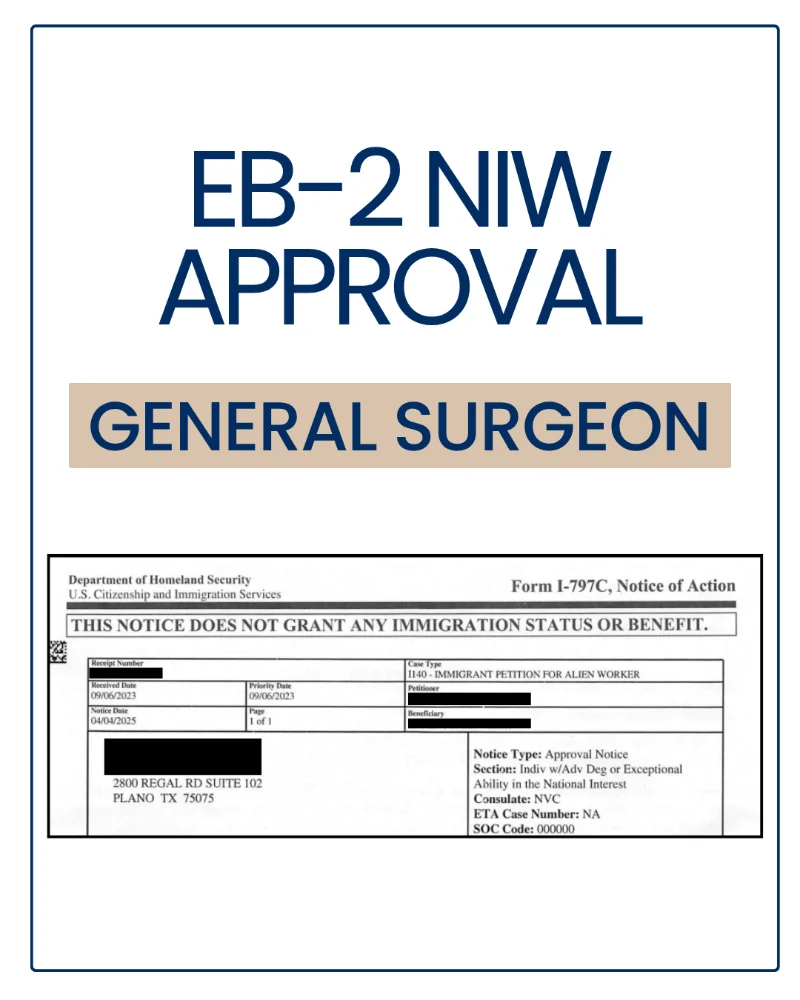
We secured USCIS approval of an EB-2 National Interest Waiver I-140 petition for a general surgery professor with expertise in liver, pancreatic, and biliary surgery. His proposed endeavor brought together continued surgical research, professional collaboration, medical education, and an intention to pursue evidence-based patient care in the United States.
The petition connected those aims with research addressing practical surgical questions: the safety of living liver donors, pain after minimally invasive surgery, and the use of anatomical models in training. His academic and clinical record provided context for the work he intended to advance.
Specialized surgical experience and academic preparation
Our client held a medical degree, a general surgery specialty qualification, and a European surgical board qualification in hepato-pancreato-biliary, or HPB, surgery. His professional record included clinical responsibilities, academic appointments, teaching, and published research.
That combination was relevant to the proposed endeavor. His clinical experience informed research questions, while his publications and education work showed experience communicating findings to other professionals and students.
We presented the qualifications and career records alongside the work plan. They explained the foundation for his intended contribution in surgery and research, with the supporting evidence showing how he had applied that background.
Research on the safety of living liver donors
One publication examined surgery-related complications in living donors undergoing right-lobe liver donation. The research considered the outcomes and complications associated with a major operation performed on healthy donors.
The study provided a specific example of his participation in research on surgical safety. Its relevance lay in examining donor outcomes and the importance of assessment, monitoring, and care around the procedure.
We used this publication to illustrate the relationship between his HPB expertise and questions that matter beyond an individual clinical encounter. His participation in this collaborative study linked surgical practice with analysis of donor outcomes.
Postoperative recovery and surgical training
Another study examined postoperative pain after laparoscopic gallbladder surgery. This prospective, randomized research evaluated a local anesthetic and different methods of administration during the early postoperative period.
The publication added a different dimension to the research record: recovery and the patient experience following a common surgical procedure. It provided an example of clinical research investigating how perioperative care could support recovery.
His work also included research on three-dimensional vascular models derived from imaging for liver surgery education. The study examined trainees’ perceptions of the models and their usefulness for understanding vascular anatomy and planning.
This example connected surgical knowledge with teaching methods. It complemented official records of his university teaching and helped explain how research and education formed related parts of his professional work.
Continued research and collaboration in the United States
The intended work plan described continued work as a surgeon and clinician-scientist, including research collaboration and engagement with professional organizations. It linked his existing expertise with efforts to contribute to surgical knowledge and evidence-based care.
We argued that the proposed endeavor could contribute to public health through research, knowledge exchange, and medical education. The petition explained those anticipated benefits using examples of the subjects he had studied and the experience supporting further work.
His citations, conference presentations, and expert assessments helped describe the reception of his work within the field. The preparation connected that record with the future plan rather than leaving its relevance to be inferred from an academic title.
The evidence and its role in the petition
Each evidence group explained a different part of the proposed endeavor and his preparation to advance it.
| Evidence | Role in the petition |
|---|---|
| Medical and specialty qualifications | Supported the EB-2 qualification argument and documented the educational foundation of his surgical expertise. |
| HPB board qualification | Provided evidence of specialized professional preparation relevant to the surgical field of the proposed work. |
| Clinical and academic appointment records | Explained his experience combining surgery, research, and education. |
| Publications on donor outcomes, postoperative pain, and anatomical models | Supplied concrete examples of research related to surgical safety, recovery, and training. |
| Citation records | Documented references to his published work in the scientific literature. |
| Conference presentation records | Showed communication of research to professional audiences. |
| University teaching records | Documented experience contributing to medical education. |
| Expert letters | Provided professional assessments of his research, surgical expertise, and potential contribution. |
| Intended work plan | Explained the proposed US activities and connected them with his existing record. |
Connecting surgical expertise with the waiver request
We brought the work plan, research examples, and professional record into a single account of the proposed contribution. The waiver argument addressed the anticipated value of his specialized research and educational work, alongside his clinical background, in explaining why waiving the job offer and labor certification requirements would be beneficial in this case.
If you are a surgeon or medical academic considering EB-2 NIW, we can assess your proposed work and the documentation supporting it. Contact Celiksoy Immigration Lawyers at us@celiksoylaw.com to discuss your research, professional experience, and plans for the United States.