Our client’s path to neuroscience began with philosophical questions about perception and the mind. She later pursued cognitive science at the University of Vienna and earned her Ph.D. in experimental psychology at Freie Universität Berlin, investigating how the brain retains information across different sensory modalities. Following research training at Massachusetts General Hospital and Harvard Medical School, she held a faculty appointment as an instructor in radiology, studying the neural mechanisms of working memory, attention, and executive control.
Our firm presented a petition connecting her interdisciplinary background and published research to a defined program of neuroimaging and brain stimulation studies. We highlighted her plans to combine functional MRI, electrical and magnetic recordings of brain activity, and computational analysis to identify patterns associated with cognition. The petition also explained her work integrating transcranial magnetic stimulation with imaging to investigate how specific brain networks contribute to cognitive performance, with potential applications in understanding neurological and psychiatric disorders.
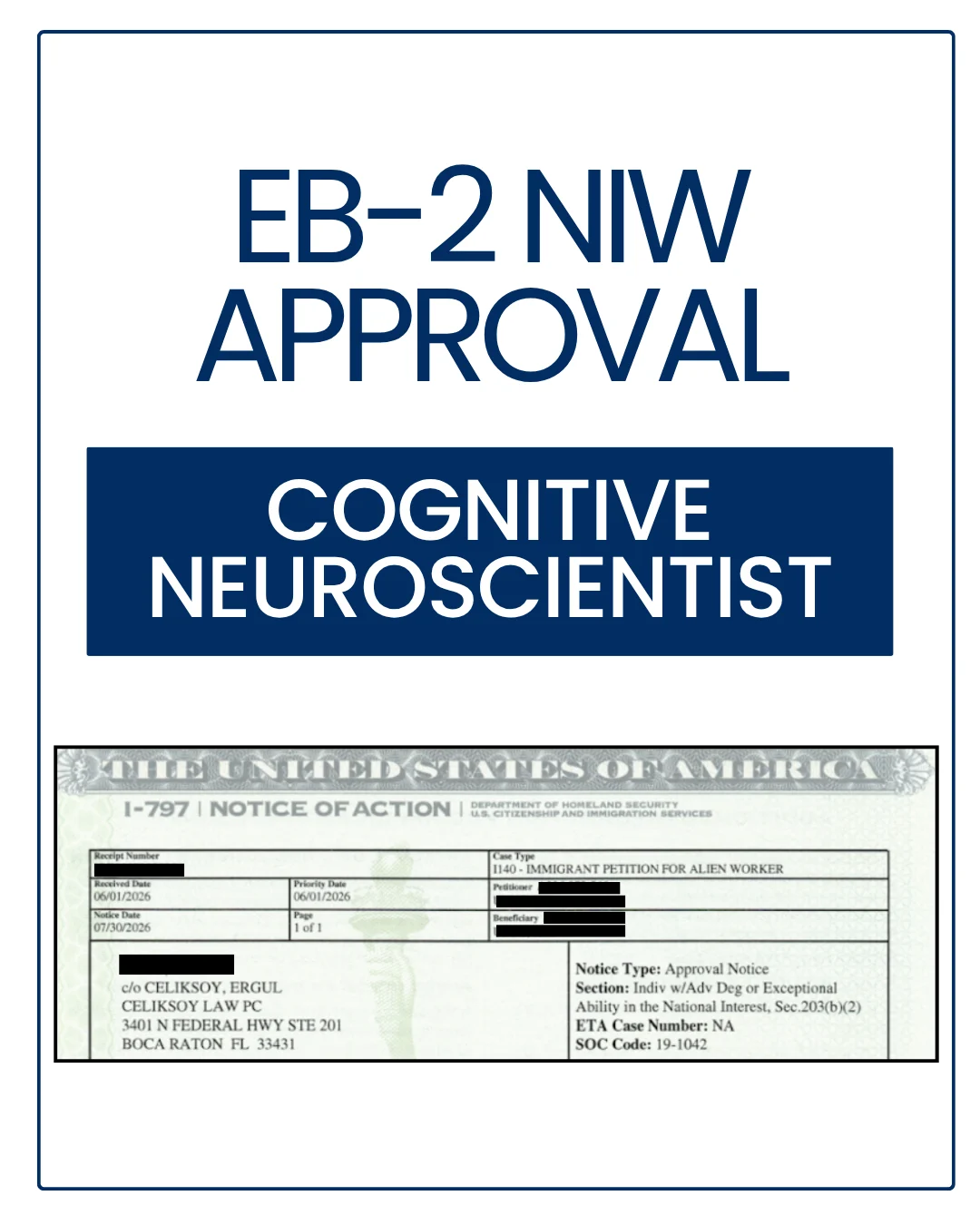
A central question running through her work is how information remains available in the brain after the original sensory input has disappeared. Her research approaches that question through complementary measurements and experiments, building evidence about both where information is represented and how neural networks sustain it. USCIS approved her I-140 petition under the EB-2 National Interest Waiver category, supporting her continued efforts to turn fundamental insights about cognition into more reliable tools for studying brain function.