
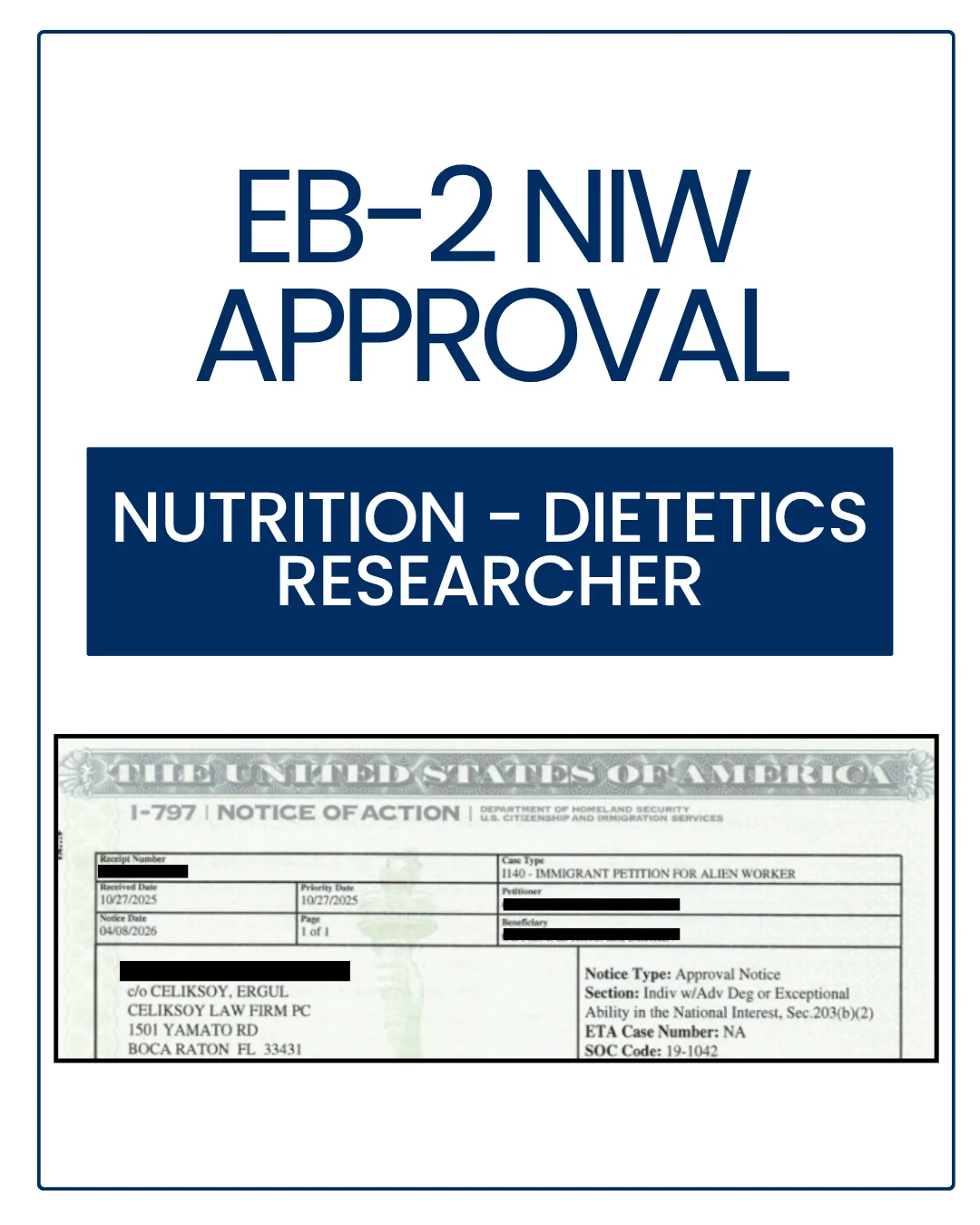
Celiksoy Law secured EB-2 National Interest Waiver approval for a nutrition and dietetics researcher whose work connects metabolic health, pediatric nutrition, and eating behavior. Her petition brought together research experience, publications, project leadership, peer review, and academic teaching to support a defined U.S. endeavor: developing and evaluating nutritional interventions through measurable biochemical and behavioral outcomes.
The distinctive feature of this case was the connection between what people eat, the challenges they face in following nutritional guidance, and how outcomes can be assessed. We presented that connection through her previous work and the research she proposed to pursue in the United States.
Nutrition research across biochemical and behavioral questions
Our client’s education included undergraduate, master’s, and doctoral study in nutrition and dietetics. Her master’s research examined emotional eating and nutritional status in adults with bipolar disorder. Her doctoral work investigated supplementation in an experimental model of fatty liver disease, including omega-3 fatty acids, branched-chain amino acids, and milk thistle.
These projects approached nutrition from different directions. One examined eating patterns and psychological context; the other investigated biochemical responses in an experimental setting. Together, they helped explain a research background combining dietary assessment with questions about metabolic and behavioral outcomes.
Her academic career included teaching, research, graduate supervision, and faculty administration. The petition presented these roles as part of her experience developing research questions, guiding student projects, and explaining nutritional science to different audiences.
The proposed U.S. endeavor
The proposed endeavor focused on three connected objectives.
Investigating nutritional approaches to metabolic disease. The client proposed developing and evaluating dietary protocols for liver disease, diabetes, and pediatric metabolic conditions. This included studying supplementation and dietary management through measurable outcomes, building on her previous research background.
Exploring functional foods and diet–behavior relationships. She planned further investigation of functional foods and gut–brain interactions in the context of eating behavior and neurodevelopmental or psychiatric conditions. The proposal included psychobiotic approaches, an area of research examining certain microorganisms and their potential relationship with mental or behavioral outcomes. These were research objectives requiring evaluation.
Linking interventions to follow-up measurements. The plan proposed connecting dietary changes with biochemical markers, metabolic measures, and behavioral assessments in children and adults. This would allow researchers to investigate responses over time and consider how interventions might be adapted to different needs.
The petition explained the potential broader contribution through methods, evaluation, and dissemination: research findings could inform nutritional care, education, and further investigation beyond an individual academic appointment. Accessible and scalable approaches were goals of the proposed program, rather than outcomes already established by the client’s record.
Publications gave the research plan a concrete foundation
Her published work supported different parts of the proposed endeavor.
Eating behavior during social isolation. A coauthored study examined adults’ reported nutritional behavior and weight changes during the COVID-19 isolation period. It found increases in emotional and uncontrolled eating, while cognitive restraint did not change significantly. This supported experience measuring eating behavior in a population setting and interpreting the relationship between social circumstances and dietary patterns.
Nutrition challenges in children with autism. A first-author study used parent questionnaires to examine food selectivity, weight status, and families’ concerns about feeding children with autism spectrum disorder. Its contribution was to describe nutritional challenges and associations within the study population. It supported the pediatric and family-centered dimension of the research plan.
Health literacy in adults with diabetes. Another coauthored study examined health literacy and food safety awareness in adults with type 2 diabetes. Higher educational attainment was associated with higher health literacy. This added a patient-education perspective: investigating nutritional approaches also requires understanding the information people have and how educational needs differ.
Pediatric nutrition and evidence synthesis. A review of nutrition and bone health in children with cerebral palsy considered feeding difficulties, nutrient intake, and skeletal health. A separate coauthored review examined literature on bee products in childhood allergic disease. These publications demonstrated engagement with existing evidence and questions for further investigation, complementing the original observational research.
The different study designs mattered to the presentation. Questionnaires supported descriptions of eating patterns and associations. Experimental work supported investigation of biochemical mechanisms. Reviews showed how the client evaluated the literature. We explained their respective roles without treating every publication as evidence of a completed dietary intervention trial.
Project leadership and academic experience
The petition described the client as principal investigator on projects involving dietary intake, mental health measures, childhood eating patterns, and chronic disease management. Examples included micronutrient intake and psychological outcomes in dialysis patients, maternal nutrition knowledge and young children’s eating behavior, and dietary or behavioral questions in adolescents.
Ethics committee approvals listed in the petition helped document research protocols and their review. They were presented alongside the project descriptions; approval of a protocol and publication of study results serve different evidentiary purposes.
Graduate supervision and teaching provided a further connection to her proposed work. Her teaching covered maternal and child nutrition, medical nutrition therapy, eating behavior, and nutrition in neurological and psychiatric conditions. Her supervision experience supported familiarity with research design, data analysis, and scientific writing across related topics.
The evidence and its role in the petition
| Evidence described in the petition | Role in the presentation |
|---|---|
| Nutrition and dietetics degrees and thesis records | Established advanced training and the biochemical and behavioral foundations of her work. |
| Academic employment and service records | Documented research, teaching, and administrative experience. |
| Original observational publications | Connected prior research to eating behavior, pediatric nutrition, and health literacy. |
| Review articles | Demonstrated evaluation of existing literature, distinguished from intervention studies. |
| Publication citations | Documented references to her work in other research and reviews. |
| Project descriptions and ethics approval records | Supported research planning and the principal-investigator roles described in the petition. |
| Conference records | Documented scientific dissemination, with presentations distinguished from attendance and abstracts. |
| Journal peer-review records | Supported experience assessing other researchers’ work. |
| Graduate supervision and teaching records | Demonstrated research training and the communication of nutritional science. |
| Professional memberships | Provided context for participation in nutrition and dietetics networks. |
| Media coverage and educational outreach | Documented communication about nutrition to wider audiences. |
| Proposed endeavor statement | Linked the research objectives to her experience and the potential contribution beyond a single position. |
Presenting a connected nutrition research agenda
We organized the petition around the relationship between the client’s experience and the methods she proposed to use. The work spanned several conditions, but the common research approach was clear: assess nutritional needs, investigate dietary and behavioral factors, and evaluate outcomes using relevant measurements.
Publications explained the scientific foundation. Project records and graduate supervision supported research experience. Peer review, citations, and dissemination helped place her work in its professional context. Academic administration complemented the record without replacing the evidence of research contribution.
USCIS approved the EB-2 NIW petition. The approval notice confirms the outcome and does not provide a detailed account of the agency’s assessment of individual evidence items.
At Celiksoy Immigration Lawyers, we assess academics’ qualifications, proposed U.S. endeavors, and supporting records together. To discuss an EB-2 NIW petition, contact us at us@celiksoylaw.com. Each case is assessed on its own facts and evidence.