Producing healthy plants at scale while preserving valuable genetic resources has been a recurring focus of our client’s research. With an academic background spanning biology, horticulture, and agricultural biotechnology, she developed laboratory propagation methods for medicinal plants and studied chromosome-doubling techniques to improve salep orchids. At the time of filing, she headed the Department of Horticulture at an agricultural research institute in Turkey. Her proposed US work extended this experience to fruit crops, vegetables, olives, and medicinal plants, with an emphasis on resilience and sustainable production.
Our firm organized her EB-2 NIW petition around the practical connection between plant biotechnology and agricultural challenges. We highlighted her proposed development of improved rootstocks, tissue culture protocols, and bioreactor systems for producing healthy plants efficiently. Her research record, academic qualifications, leadership experience, and expert reference letters supported her ability to advance these projects. The petition explained how expanding crop diversity and improving propagation methods could help address drought, salinity, disease susceptibility, and pressure on wild plant populations.
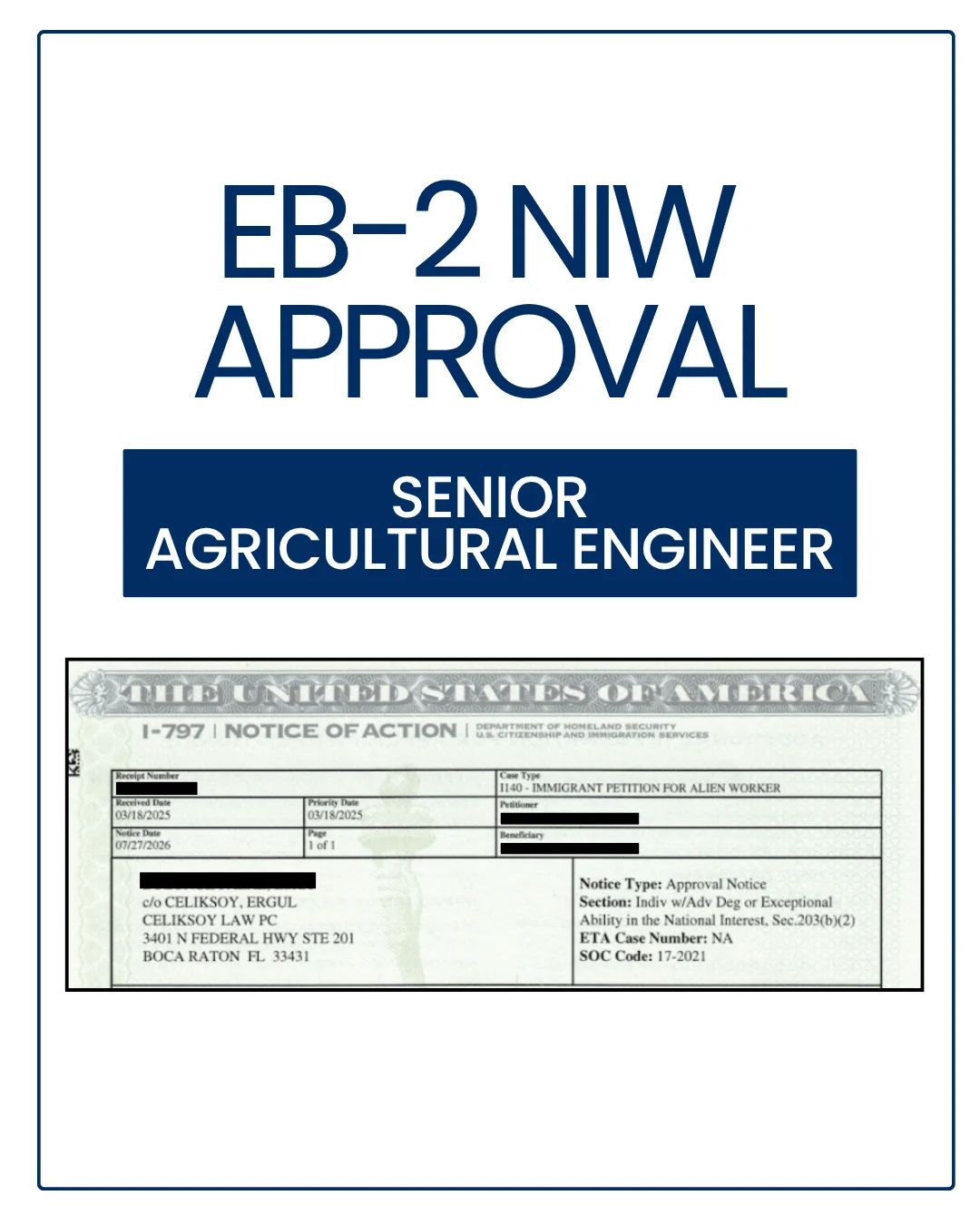
The value of her proposed work lies in moving promising plant traits from laboratory research toward reliable cultivation. For growers, that could mean more resilient planting material; for conservation efforts, a sustainable way to propagate species vulnerable to overharvesting. USCIS approved her I-140 petition under the EB-2 National Interest Waiver category, advancing her plans to pursue these complementary goals in the United States.