
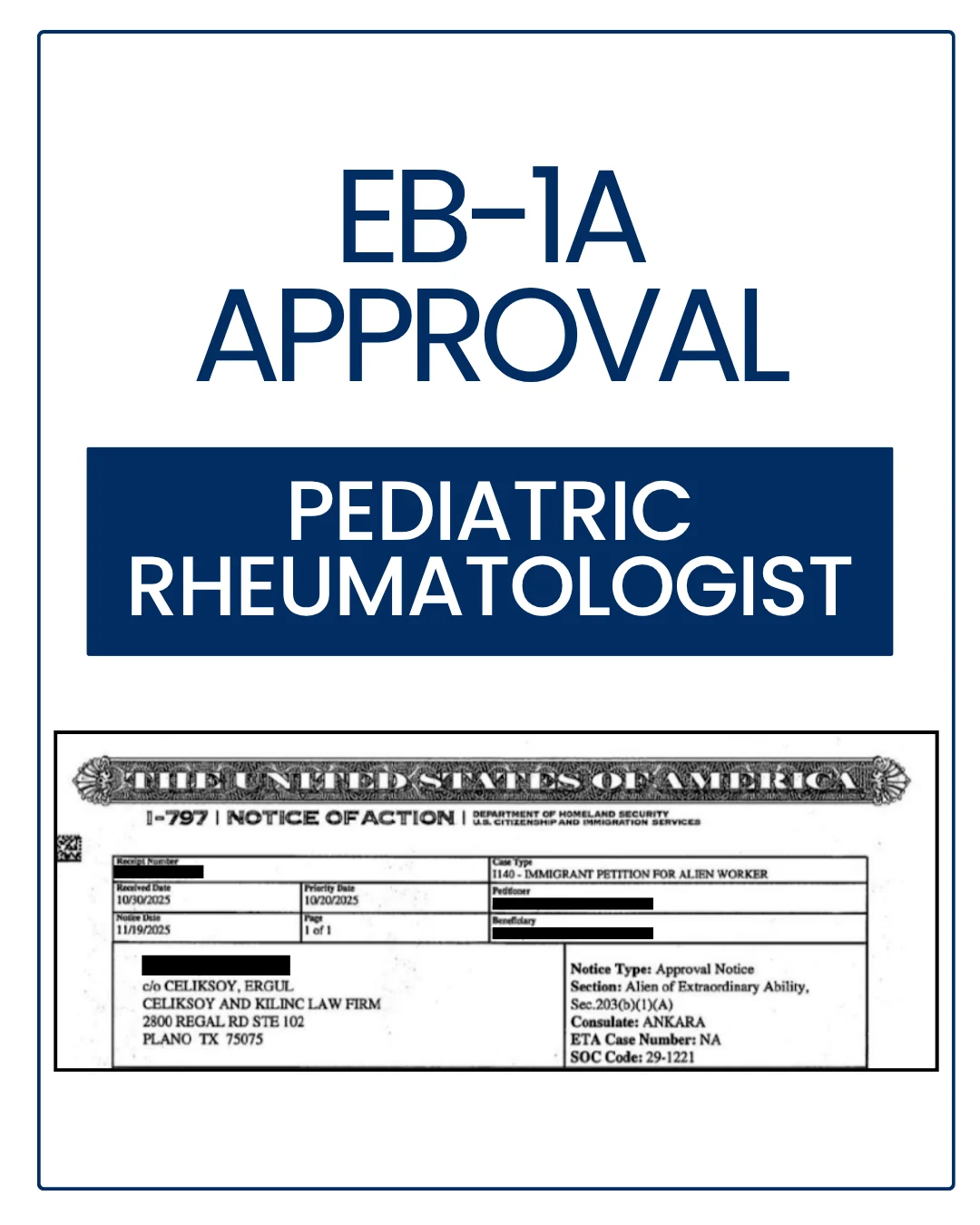
We secured USCIS approval of an EB-1A I-140 petition for a pediatric rheumatologist whose research addresses difficult decisions in the care of children with autoimmune and autoinflammatory diseases. His record brought together clinical studies, digital assessment research, scholarly publications, and professional recognition.
The petition had a distinct scientific focus: identifying children who may not respond adequately to treatment and examining when therapy might be reduced after disease control. We explained these research questions through specific studies and connected them with evidence of the applicant’s contributions and standing within the field.
Research on treatment resistance in familial Mediterranean fever
Our client combines specialist pediatric rheumatology practice with academic teaching and research. A central part of his record concerned familial Mediterranean fever, or FMF, an autoinflammatory condition associated with recurrent inflammatory attacks.
One collaborative study examined a score for predicting resistance to colchicine at the time of diagnosis. Using multicenter registry data, the researchers investigated which clinical and genetic features could help identify children at greater risk of an inadequate response.
We highlighted the question behind the scoring system: whether information available early in the disease could support a more informed assessment of treatment response. The petition described the study’s contribution to risk prediction, placing the applicant’s involvement within the collaborative research rather than attributing the entire project to one person.
Studying treatment reduction after disease control
His submitted record also included research into the withdrawal of canakinumab in children with colchicine-resistant FMF. This study examined a structured approach to reducing and withdrawing biologic therapy, with monitoring of disease activity and relapse.
The work addressed a different side of the same clinical problem. Alongside identifying a need for stronger disease control, the research investigated whether treatment could be reduced in selected circumstances. We explained this relationship to give the petition a coherent account of his research interests.
Related publications examined treatment decisions in other childhood inflammatory disorders, including vasculitis and juvenile arthritis. These studies broadened the record while keeping the narrative centered on treatment response, disease monitoring, and individualized assessment.
Digital assessment and diagnostic research
Another strand of his work explored digital methods in pediatric rheumatology. The submitted publications included evaluation of a video-based musculoskeletal examination for children and research into artificial intelligence applied to childhood lupus diagnosis.
The remote assessment study examined how a structured examination could be adapted to video consultations. The AI study investigated a model using clinical and laboratory information. These were presented as research contributions with specific methods and findings, supporting an account of his interest in diagnostic and monitoring tools.
We also considered his participation in collaborative research groups and research training opportunities. These materials helped explain the environment in which he worked and his continuing involvement in the field. They complemented the publications without replacing the evidence of what the research itself contributed.
The evidence and its role in the petition
Our presentation organized the submitted materials around the scientific work, its recognition, and the applicant’s evaluation of other researchers’ studies.
| Evidence presented | Role in the petition |
|---|---|
| Peer-reviewed publications | Explained studies of treatment resistance, biologic withdrawal, childhood inflammatory disease, and digital assessment, together with the applicant’s authorship and participation. |
| Citation records and examples of citing literature | Supported the argument about the research’s reception and its relationship to subsequent scholarship. |
| Journal review correspondence and activity records | Presented evidence of assessing other researchers’ work, with invitations and completed evaluations distinguished where the records allowed. |
| Scientific presentation awards and conference materials | Documented recognition of specific work and its dissemination within professional settings. |
| Research-group and professional committee materials | Described documented participation and responsibilities within collaborative scientific networks. |
| Research mission grants and training records | Explained support for research development and collaboration, separately from awards recognizing completed scientific work. |
| Published coverage | Added evidence of attention to the applicant’s work and expertise, assessed according to the content of each item. |
| Academic and clinical appointment records | Established the professional context of his pediatric practice, teaching, and research. |
| Statement of intended work | Connected plans for continued pediatric rheumatology and digital health research with his documented expertise. |
Together, these materials supported our argument that the overall record demonstrated sustained recognition and extraordinary ability in his field. USCIS approved the I-140 petition under the EB-1A classification.
Continuing pediatric rheumatology research
His stated plans focused on further research into childhood autoimmune and autoinflammatory disorders, treatment response, and digital monitoring. We related those plans to the clinical questions and methods already present in his publication and research record.
If you are considering an EB-1A petition as a pediatrician or specialist physician researcher, an assessment can examine your individual contributions, their recognition, and the documentation supporting them. You can contact us at us@celiksoylaw.com to discuss your professional background and plans to continue your work in the United States.