
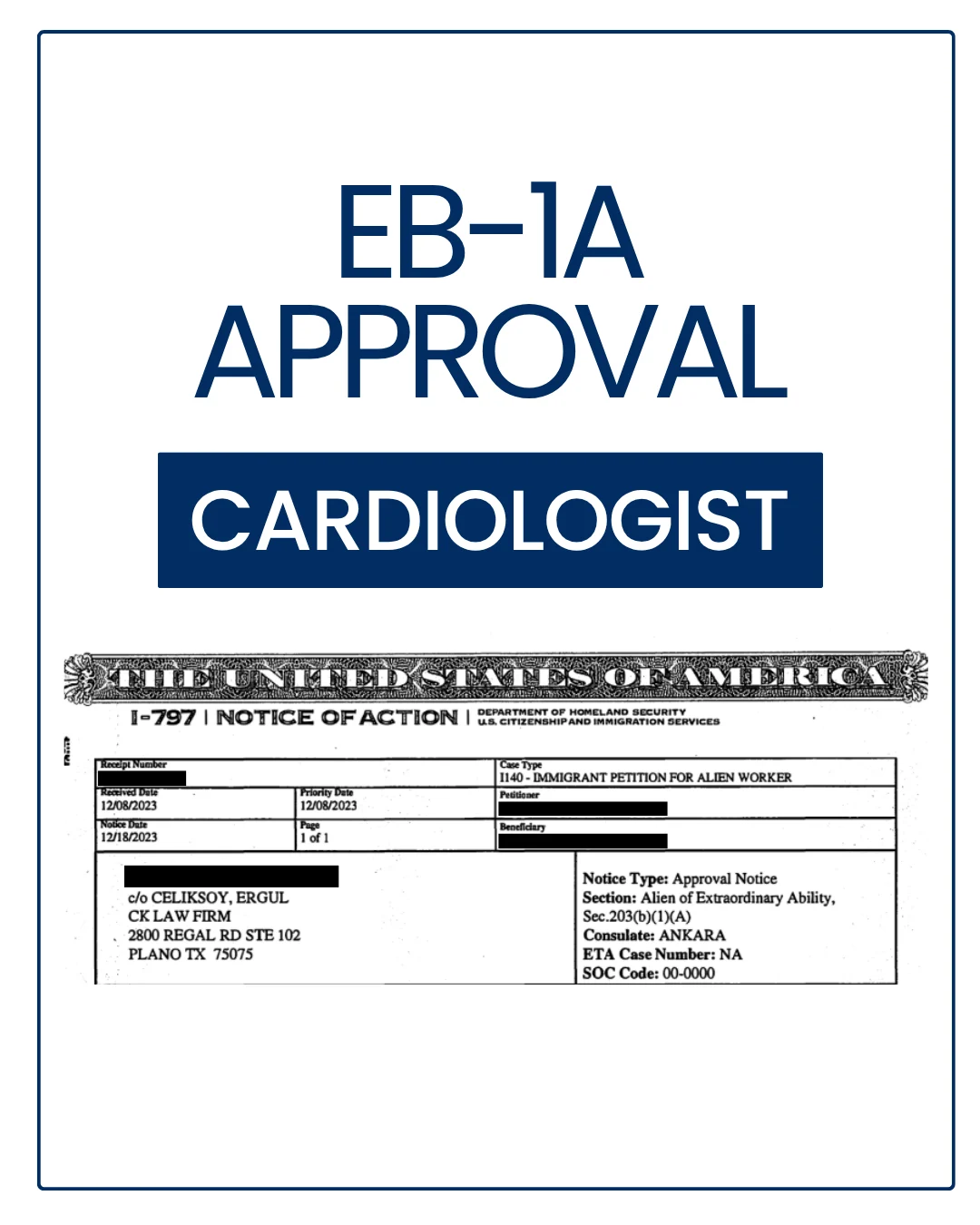
We secured USCIS approval of an EB-1A I-140 petition for a cardiology professor whose career combines clinical medicine, cardiovascular research, and bionanotechnology. The petition presented his scientific publications, recognition within cardiology, and work evaluating other researchers’ studies as a connected record of achievement.
His case illustrates the importance of explaining what a physician’s research contributes to a field. An academic title and publication list provide useful context. The petition also needs to explain the research itself, the attention it has received, and the evidence supporting the applicant’s professional standing.
A clinical career with an interdisciplinary research focus
Our client is a practicing cardiologist and medical educator with doctoral training in bionanotechnology engineering. His professional background brings together patient care, teaching, and research into the biological processes associated with cardiovascular disease.
His scholarly work includes studies of heart failure, coronary disease, and cardiovascular risk. Within that broader record, research on circulating microRNAs formed a particularly relevant part of the petition. These small RNA molecules can be studied in blood samples, and his publications examined their potential value as indicators of disease and prognosis.
His engineering background added another dimension: laboratory research involving nanoformulations and drug-release characteristics. This work helped explain the interdisciplinary nature of his research interests, alongside the cardiovascular studies that formed the central scientific narrative.
Cardiovascular biomarker research at the center of the petition
We highlighted publications examining circulating microRNAs in heart failure and acute coronary conditions. The research explored whether molecular patterns could provide information about disease or cardiovascular risk, including relationships with established clinical measures.
Other studies in the submitted record examined inflammatory markers and longer-term cardiovascular outcomes. Together, these publications showed a sustained interest in the information that biomarkers can contribute to cardiovascular assessment. We described the research questions and findings in language that made their relevance accessible beyond a specialist audience.
The distinction between promising research and established clinical use mattered. The petition’s account of these studies focused on their scientific contribution and potential relevance. It did not depend on presenting exploratory biomarkers as routine diagnostic tools or laboratory drug-delivery work as a treatment already proven in patients.
Connecting publications with evidence of recognition
The petition included citation evidence and expert letters discussing the applicant’s work and professional contributions. We used these materials to support the significance of the research, alongside the publications themselves. The objective was to explain both what he had authored and how his work had been recognized within the field.
His peer-review record supplied a different kind of evidence. It included reviews for scientific journals and participation in research-proposal evaluation. These activities concerned the assessment of other researchers’ work and were presented separately from his own authorship and citation record.
Research awards, professional fellowship designations, and published coverage of his achievements provided further context. We distinguished recognition for research from professional association status and training opportunities, so that each item had a clear role in the petition. This avoided treating every credential as the same type of achievement.
Building a coherent EB-1A presentation
Our work centered on organizing a broad medical and academic record into a focused petition. Cardiovascular publications established the research themes; citations and expert letters supported the argument about their significance; peer-review documentation showed his evaluation of others’ work; and recognition materials added evidence of professional standing.
We also placed his bionanotechnology training in context. It helped explain the direction of his interdisciplinary work without displacing the evidence of achievement in cardiology. His proposed work in the United States was presented as a continuation of that clinical and scientific trajectory.
The petition brought these materials together to argue that the overall record demonstrated sustained national and international recognition and extraordinary ability. USCIS approved the I-140 petition under the EB-1A classification.
Considering EB-1A with a medical research background
For a cardiologist or other physician researcher, the relevance of an academic record depends on how its parts fit together. Publications describe the work undertaken; citations, expert assessments, research recognition, and documented review activity can help explain its reception and the physician’s position within the field.
If you are considering an EB-1A petition, reviewing your research themes and supporting documentation can help identify which parts of your record deserve closer assessment. You can contact us at us@celiksoylaw.com to discuss your professional background and plans to continue your work in the United States.