
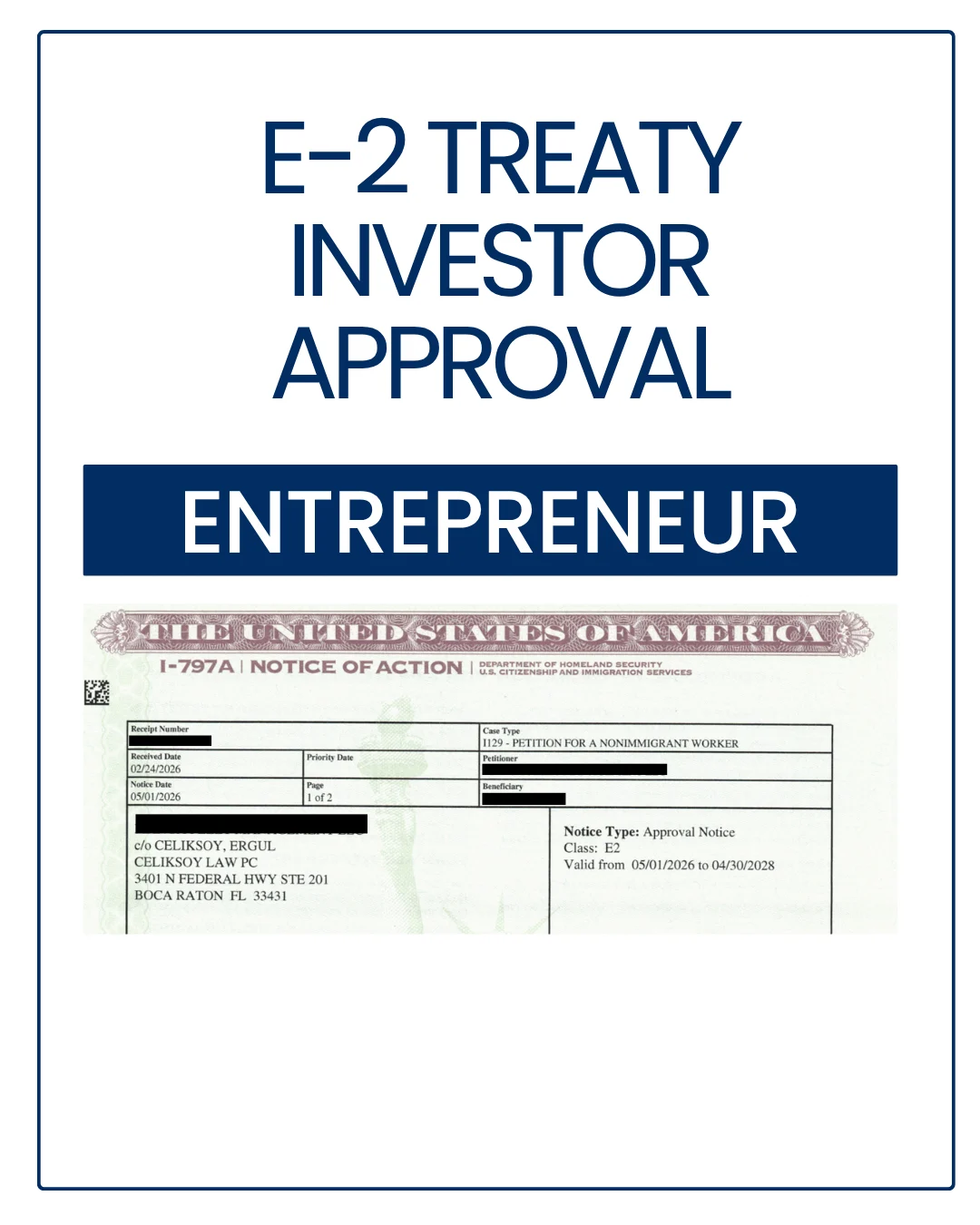
Celiksoy Law prepared an E-2 investor petition for a Turkish entrepreneur who established a car rental business in Florida. Her investment came from the sale of personally owned property in Türkiye and income from consultancy services. The filing connected those sources with transfers into the business, vehicle purchases, rental activity and employment records.
The company used Turo to offer vehicles to customers in the Tampa Bay area. By the filing stage, the record included dealer documents, vehicle ownership records, platform earnings summaries and payroll journals. A business plan explained the proposed management role and the next steps for developing the enterprise.
Connecting two funding sources to the US investment
The funding presentation began with the investor’s ownership of residential property in Türkiye. A title deed and sale agreement established the underlying transaction, while a notarized power of attorney explained the involvement of authorized representatives in handling the sale.
The payment arrangements required a clear account of who received the proceeds and in what capacity. The petition included bank records relating to receipts, transfers between accounts, currency conversions and international transfers. These records were organized alongside the source-of-funds narrative to explain how money from the property transaction reached the United States.
Consultancy income formed a separate part of the funding history. The services concerned e-commerce product listings and digital marketplaces. An agreement, invoice and bank record supported the account of the work and payment. The narrative then followed the subsequent transfer of funds to the investor’s US account and contributions to the company’s business accounts.
This presentation distinguished the origin of the funds from their later movement. The sale documents explained the property transaction, the consultancy documents explained earned income, and the banking evidence addressed the amounts subsequently transferred and contributed. The petition also identified a cash deposit separately from the electronic transfers rather than treating every contribution as an international wire.
Turning capital into a rental fleet
The use-of-funds section linked company spending to the vehicles at the center of the business. Buyer’s orders identified individual acquisitions, while business bank statements and dealer receipts documented payments. Title applications, issued titles and related vehicle paperwork supplied further evidence of the acquisition and ownership history.
Several purchases involved payments made before the final dealer paperwork. The petition’s narrative explained the advance-payment arrangements and linked them to the later acquisition documents. Other purchases involved more than one payment, including transfers from different business accounts. Those payments were presented together against the relevant vehicle purchase.
The distinction between capital contributed and money spent on assets also remained important. The filing described completed vehicle purchases separately from the remaining funds allocated to insurance, maintenance, payroll and other operating needs. A business account balance and a completed vehicle acquisition represented different stages of the investment record.
Rental activity supported by platform records
Turo screenshots showed vehicle listings, trip information and earnings summaries. Some listed vehicles were marked as on a trip, and the dashboard recorded trip earnings in the periods shown. These materials provided evidence of rental activity beyond the acquisition of the fleet itself.
The earnings presentation separated trip earnings from upcoming earnings and reimbursements. Upcoming bookings were not treated as completed rental income, and the platform figures were not described as the company’s net profit. They supplied a record of activity through the booking channel, alongside the bank, vehicle and employment documents.
The business plan explained the work involved in operating the fleet: preparing vehicles, arranging maintenance, coordinating deliveries, responding to customers and managing pricing. This gave context to the assets and platform records by showing the services the business intended to deliver and the resources needed to support them.
Existing payroll and planned expansion
The employment evidence included payroll journals recording wages for an employee, federal wage and employment tax materials, and Florida employment tax registration documents. These records supported the account of employment activity at the filing stage.
The business plan addressed future staffing separately. It proposed additional fleet support, detailing and administrative capacity as vehicle numbers and booking demand increased. Its financial model included assumptions about utilization, rental payouts, operating expenses and payroll.
These were forward-looking plans. The projected annual revenue and profit figures were not presented as completed-year results. The petition brought the existing operating record together with a plan for future earning capacity and employment, allowing the business’s current activity and proposed development to be considered on their respective evidence.
Ownership and experience relevant to directing the business
Formation documents, the operating agreement, a membership certificate and a written company resolution supported the investor’s ownership and proposed management authority. The resolution appointed her Managing Member and CEO, with responsibility for company decisions.
Her résumé described experience owning an e-commerce business and a property investment business, alongside earlier logistics sales and business development roles. Supplier coordination, pricing, customer relationships, contracts and operational planning were recurring elements of that background.
The proposed role connected that experience to fleet acquisitions, budgeting, pricing strategy, service providers and staffing. The business plan described how she intended to develop and direct the enterprise under the requested E-2 status.
Bringing the investment and operating record together
USCIS approved the E-2 petition together with the accompanying request for a change of status. The petition connected the investor’s funding history with the business she intended to direct. Property and consultancy records addressed the origin of the money, banking and dealer records addressed its movement and use, and rental and payroll materials documented aspects of the operating enterprise.
Celiksoy Law advises entrepreneurs on preparing E-2 investment records and presenting the commercial plans behind their businesses. To discuss your proposed investment and the supporting documents, contact our team.