
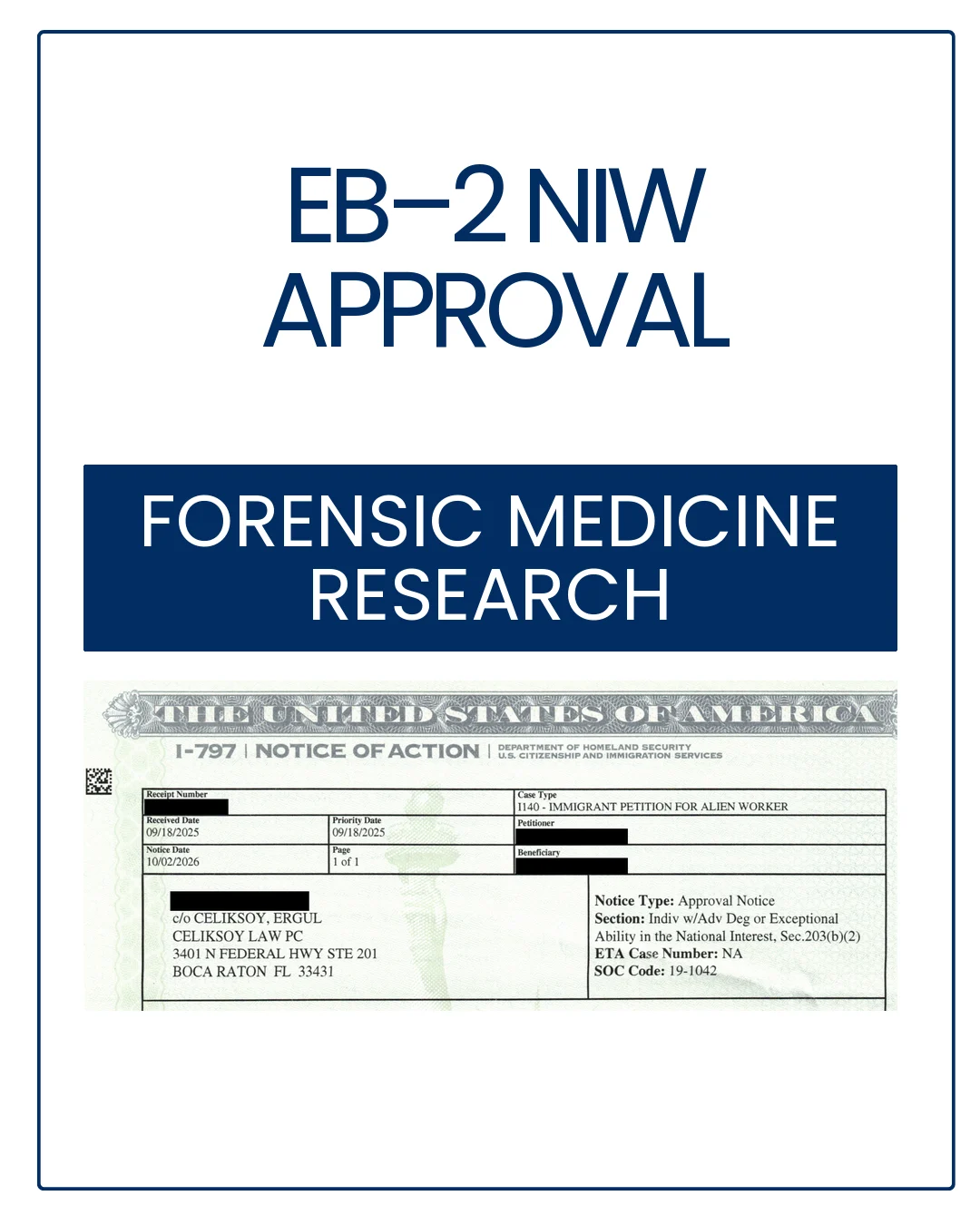
Celiksoy Law prepared an EB-2 National Interest Waiver petition for a physician whose work connects forensic medicine, neurobiology and suicide research. The filing linked her medical experience and specialist training with published research, participation in funded projects and a proposed US endeavor focused on the scientific quality of death investigations.
The case centered on a defined research direction: examining biological findings in postmortem samples and exploring how forensic knowledge could inform further psychiatric and public health research. Her professional record was presented in relation to that direction, with supporting assessments from supervisors and external experts.
A proposed endeavor connecting forensic findings with public health
The intended US work involved forensic pathology and neuropathology research, with an emphasis on improving the consistency and reliability of investigations into suspected suicide deaths.
The plan described work on sampling and examination protocols, the analysis of molecular and tissue findings, and collaboration across forensic medicine, psychiatry and neuroscience. It also proposed connecting research findings with public health data and prevention-related research.
We explained the intended contribution through these activities. More consistent methods could support research comparisons and the interpretation of forensic findings, while multidisciplinary collaboration could help researchers examine questions that cross the boundaries of a single specialty. These were prospective aims of the endeavor.
Published research on postmortem biological markers
A co-authored study compared leptin, insulin, orexin and neuropeptide Y in postmortem cerebrospinal fluid samples. Neuropeptide Y differed between the groups studied, while the other markers did not show statistically significant differences. The paper identified a direction for further research rather than an established clinical prediction test.
The petition used this publication as a concrete example of her participation in a collaborative investigation. It connected laboratory research with the forensic and neurobiological questions underlying her proposed work.
Funded projects showing continuity in the research direction
The support letter described her participation in two university-funded team projects. One investigated biological markers in postmortem cerebrospinal fluid and was reported as completed. The second examined additional markers in brain tissue and cerebrospinal fluid and was ongoing at the filing stage.
Her described contributions included biochemical analysis and interpretation in the earlier project, followed by involvement in study design, data collection and laboratory work in the later investigation.
These projects supplied context for the proposed endeavor. They showed experience working with a research team and developing a related line of investigation over time. The completed project, published work and ongoing study were presented according to their respective stages.
Medical experience and ongoing specialist training
The applicant held a medical degree and had undertaken clinical work before entering forensic medicine residency. The petition described experience in patient assessment and care, followed by specialist training involving medico-legal examinations, autopsies, tissue evaluation and reporting.
Her supervisor’s assessment, quoted in the support letter, discussed her contribution to forensic casework and research. This helped explain the professional setting in which she developed her interest in the relationship between biological findings, psychiatric information and forensic interpretation.
The educational and employment records described in the filing supported this progression. At the time of the petition, the residency was ongoing. The narrative therefore presented her as a physician and researcher undertaking specialist training.
Expert assessments, professional development and public communication
The filing included assessments from research supervisors, forensic medicine professionals and external biomedical researchers. Their perspectives served different purposes: direct supervisors described observed work, while external opinions considered the research direction and its potential significance.
The petition also described professional training, conference attendance and memberships. These materials added context about her engagement with forensic medicine and scientific communities. A publication incentive associated with the research supplied a further item in the professional record.
National news coverage discussed the research and included her comments. We used that material to describe public communication of the work, alongside the publication itself and the project history. The scientific account remained grounded in the study and the research activities described in the filing.
Explaining the national interest connection
The petition related the proposed endeavor to the quality of forensic information and the broader value of research that can be shared across institutions. Its public health argument addressed the potential usefulness of better data, reproducible methods and collaboration between research disciplines.
Our presentation connected that future work with her existing preparation: medical training, forensic case experience, a published investigation and participation in funded projects. The expert assessments added context to the account of her ability to advance the proposed activities.
The filing also explained why waiving the job offer and labor certification requirements would benefit the United States in the circumstances presented. The proposed contribution was framed through research and knowledge exchange extending beyond one employment position.
A focused research record connected to a future plan
This petition brought together the applicant’s medical background, forensic training and research activity around a specific proposed endeavor. The publication supplied a study example, the funded projects showed continuity, and professional assessments explained her contributions and preparation.
USCIS approved the Form I-140 petition under the EB-2 National Interest Waiver category, allowing her to continue toward permanent residence in the United States without a job offer or labor certification.
Celiksoy Law advises physicians and researchers on presenting their experience and proposed US work in EB-2 NIW petitions. Contact our team to discuss your background and plans.