
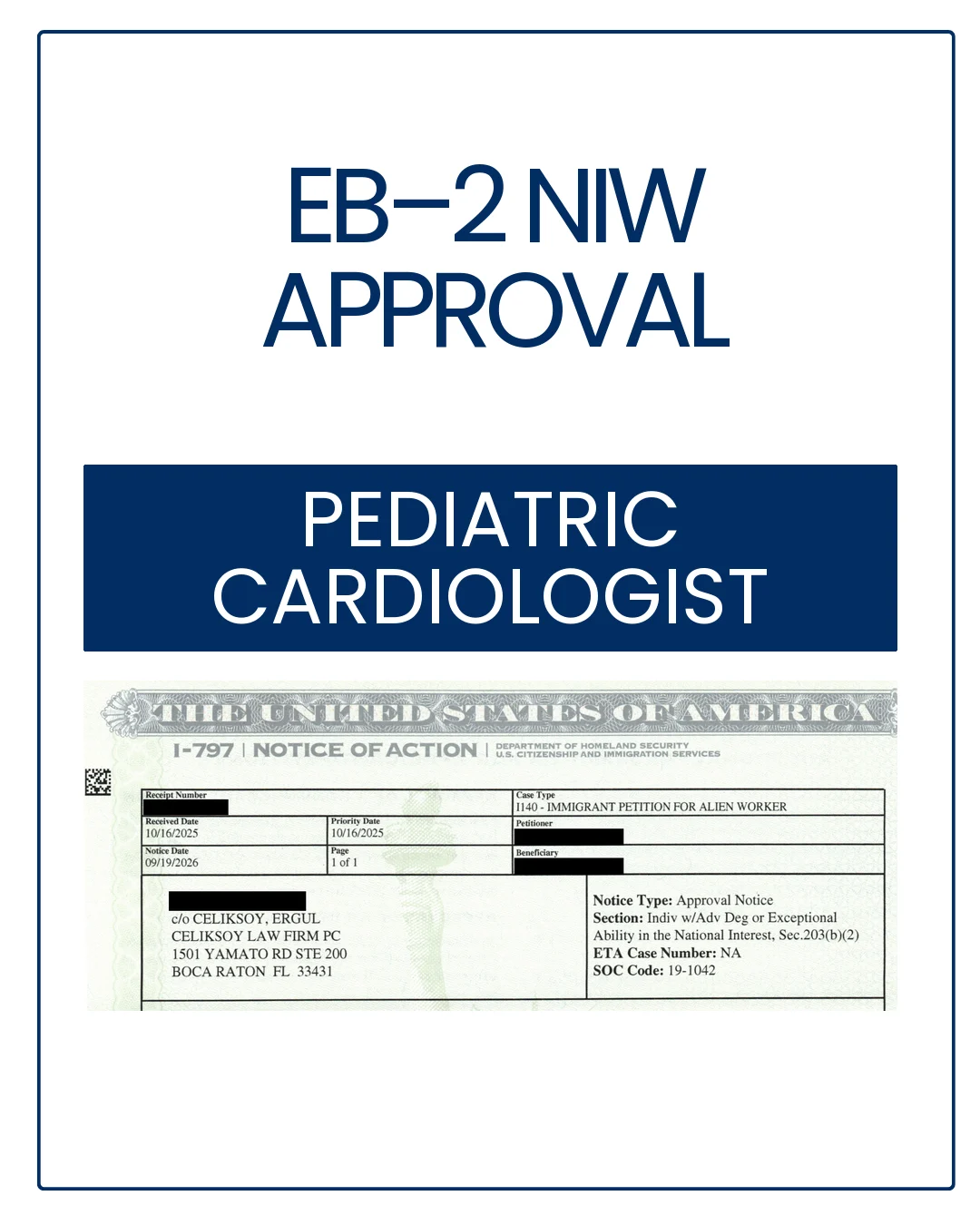
Celiksoy Law prepared an EB-2 National Interest Waiver petition for a pediatric cardiologist whose proposed work focused on cardiac pacing and long-term cardiovascular care in children. The filing connected his specialist training and hospital experience with published research, accepted educational chapters and plans for further clinical investigation in the United States.
Two publications gave the case a specific research foundation: a study of early outcomes following a pediatric pacing technique and a case report documenting persistent coronary abnormalities after multisystem inflammatory syndrome in children, or MIS-C. Together, they supported a proposed endeavor concerned with both intervention and follow-up.
A defined research plan for pediatric pacing
The main proposed work involved conduction system pacing, including left bundle branch area pacing. These approaches seek to use the heart’s electrical conduction pathways when delivering pacing support.
The applicant’s plan addressed implantation methods, device settings and the evaluation of outcomes as children grow. It also proposed work on follow-up protocols and collaboration with specialists in pediatric electrophysiology, cardiac imaging and related disciplines.
We presented these as intended research activities. The case explained the relationship between the clinical problems he had encountered, the research in his record and the questions he planned to pursue next.
A publication examining early pacing outcomes
The applicant co-authored a retrospective, single-center study examining left bundle branch area pacing in children. It assessed procedural feasibility, pacing measurements and early follow-up findings.
This study supplied a concrete example of experience investigating a clinical technique through patient data. Its early-outcome focus supported the proposed direction of further evaluation, including the longer-term questions set out in his work plan.
The petition connected the publication with his pediatric cardiology training and clinical experience. This helped explain the basis of his interest in pacing methods and the assessment of cardiac function over time.
Long-term follow-up after MIS-C
A second co-authored publication described a child with MIS-C and multiple giant coronary artery aneurysms. The case report documented coronary abnormalities that persisted during extended follow-up despite improvement in clinical and laboratory findings.
We used this report to illustrate another part of the applicant’s research interests: understanding how cardiac findings can evolve beyond the initial illness. Its relevance to the proposed endeavor lay in the attention to follow-up, imaging and longitudinal assessment.
The two publications addressed different clinical settings. One examined early experience with a pacing approach, and the other documented a prolonged course of disease. They provided separate examples of the applicant’s participation in clinical research relevant to his future plan.
Specialist preparation and hospital responsibilities
The applicant completed medical education followed by qualifications in pediatrics and pediatric cardiology. His professional history included pediatric hospital practice, subspecialty training and a pediatric cardiology appointment at the filing stage.
The support letter described inpatient and outpatient care, intensive care consultations, echocardiographic assessment and multidisciplinary work with children who had complex heart conditions. Employment and training records were identified as supporting documentation.
This background supplied the clinical context for the research. We explained how experience caring for children, interpreting cardiac findings and coordinating with other specialists related to his proposed work on pacing and follow-up methods.
Educational writing and scientific communication
The petition also described two book chapters accepted for publication, one addressing advanced pediatric heart failure and the other pediatric pulmonary hypertension. These were presented as accepted educational contributions at the filing stage.
They added a further dimension to the professional record: explaining specialized clinical knowledge for a medical readership. We connected that experience with the applicant’s interest in developing useful protocols and communicating research findings.
Conference documentation included recognition for an oral presentation concerning pediatric lung transplantation, alongside attendance at pediatric and cardiology meetings. The award and attendance records had different roles in the filing: one documented recognition for a particular presentation, while the others described continuing professional engagement.
Professional engagement and public health communication
A professional society membership certificate added context about his participation in the pediatric cardiovascular community. The filing also described national newspaper coverage featuring his comments on children’s heart health and everyday health habits.
We treated that coverage as an example of public communication alongside the scientific record. The central account of the proposed endeavor remained focused on the research questions, specialist experience and planned studies described in the petition.
Connecting the record to the national interest argument
The petition’s argument focused on the potential contribution of pediatric-specific research, consistent follow-up methods and knowledge that could be shared across clinical institutions. The proposed work addressed questions relevant to the care of children with conduction disorders and post-inflammatory cardiac complications.
Our presentation connected these aims with the applicant’s prior preparation. His qualifications explained the professional foundation, publications supplied examples of clinical investigation, and educational contributions showed experience organizing and communicating specialist knowledge.
The filing also addressed why waiving the job offer and labor certification requirements would benefit the United States in the circumstances of the case. It explained the proposed contribution through research collaboration and the development of knowledge extending beyond one employment position.
A research direction supported by clinical experience
This petition brought together pediatric cardiology training, clinical investigation and a plan for further work on pacing and long-term follow-up. The different evidence groups explained the applicant’s experience, the questions he had studied and the activities he intended to advance.
USCIS approved the Form I-140 petition under the EB-2 National Interest Waiver category, allowing him to continue toward permanent residence in the United States without a job offer or labor certification.
Celiksoy Law advises physicians and researchers on presenting their professional record and proposed US work in EB-2 NIW petitions. Contact our team to discuss your experience and plans.