
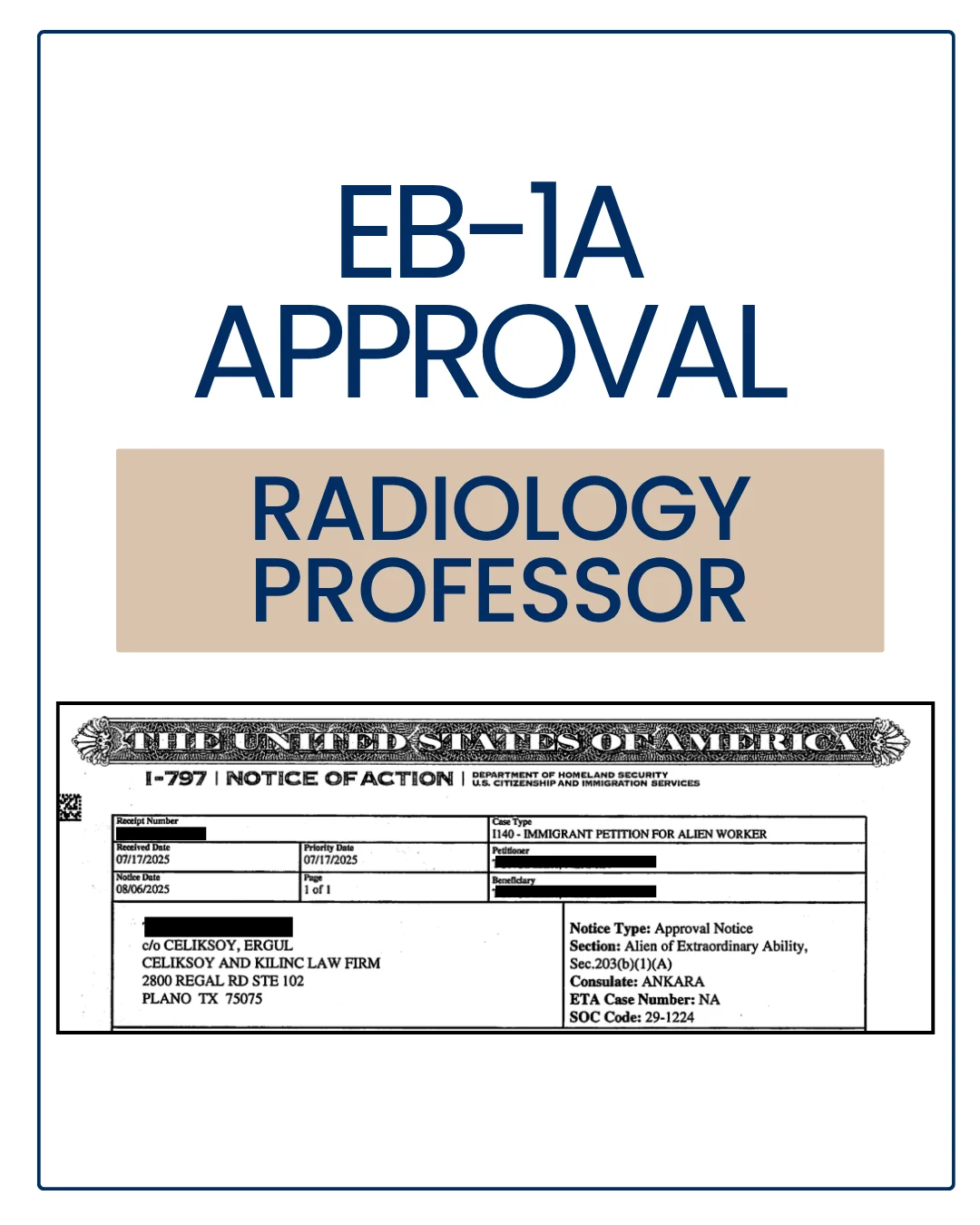
We secured USCIS approval of an EB-1A I-140 petition for a radiology professor whose work combines breast imaging research, clinical practice, and academic evaluation. The petition explained her scientific contributions through specific studies, then connected them with evidence of research recognition and professional responsibility.
Her case brought together several dimensions of an academic radiology career: investigating what imaging reveals about tumors, contributing radiological expertise to clinical research, and evaluating the work of other physicians and researchers. Our presentation showed how these activities formed a sustained professional record.
Breast MRI research with a focus on tumor characteristics
Our client’s research examines the information that imaging can provide about breast lesions and cancer behavior. A central theme was dynamic contrast-enhanced MRI, which tracks changes in tissue appearance following the administration of a contrast agent.
The submitted studies investigated relationships between MRI findings, tumor vascularity, and pathological characteristics. Other work examined whether imaging parameters were associated with disease-free and overall survival. These studies explored imaging’s potential to provide information relevant to prognosis as well as diagnosis.
The petition also described research using diffusion-based MRI techniques to investigate tissue characteristics and their relationship with outcomes. We explained the scientific questions behind these methods and placed the findings within the studies’ reported scope. That gave the petition a clear account of the research contribution without relying on broad claims about improved patient outcomes.
Imaging research relevant to biopsy and lesion assessment
Another part of the record concerned decisions surrounding breast lesions. Her collaborative publications included studies of suspicious mammographic microcalcifications and the additional information provided by MRI contrast enhancement.
The petition also highlighted multicenter research examining outcomes after image-guided biopsy of high-risk breast lesions. These studies addressed how imaging findings and pathological results can inform risk assessment and further management. They supplied concrete examples of the clinical questions underlying her research.
We presented her participation in these publications alongside the wider research record. Multicenter findings were described as the work of the collaborating teams, while the petition identified the applicant’s involvement and contribution. This kept the scientific importance of a study distinct from claims about individual leadership.
Clinical research and the evaluation of other scholars
The submitted record included appointments in oncology clinical trials, with roles as a radiologist or investigator depending on the study. Imaging responsibilities described in the petition concerned assessment of disease, treatment response, and progression. These materials showed how her radiological expertise contributed to organized clinical research.
Her academic evaluation work added a separate perspective. The petition described journal peer review, editorial service, and participation in academic promotion and thesis examination panels. These activities involved assessing other researchers’ work and were presented separately from her own authorship.
Research presentation awards, published coverage of her expertise, and professional leadership materials supplied further evidence of recognition. We placed each document in context, distinguishing recognition for particular research presentations from routine professional affiliation or continuing education.
The evidence and its role in the petition
The petition used complementary evidence to explain the research, its reception, and the professional responsibilities entrusted to the applicant.
| Evidence presented | Role in the petition |
|---|---|
| Scientific publications | Explained studies of breast MRI, tumor characteristics, prognosis, and breast lesion assessment, together with the applicant’s authorship and participation. |
| Citation records and examples of citing literature | Supported the argument about the research’s reception within the field and its relevance to subsequent scholarship. |
| Clinical trial appointment materials | Documented radiology and investigator roles in specific studies and their connection with her clinical research experience. |
| Journal review, editorial, and academic jury records | Presented evidence of evaluating other researchers’ manuscripts, academic portfolios, and thesis work. |
| Research presentation award certificates | Documented recognition of specific scientific work presented at professional meetings. |
| Published interviews and coverage | Showed attention to her expertise and professional work, with the content of each item considered separately. |
| Academic appointment and professional leadership materials | Established career context and documented responsibilities within academic radiology and the profession. |
| Statement of intended work | Connected plans for continued imaging research with the expertise and contributions documented in the petition. |
Together, these materials supported our argument that her overall record demonstrated sustained national and international recognition and extraordinary ability in radiology. USCIS approved the I-140 petition under the EB-1A classification.
Continuing research in breast imaging
Her stated plans focused on continued research in oncologic imaging and precision diagnostics, including exploring radiomics and artificial intelligence alongside established imaging methods. We connected those plans to the breast imaging studies and clinical research experience already documented in her record.
If you are considering an EB-1A petition as a radiologist or medical academic, an assessment can examine your specific research contributions, professional recognition, and supporting documentation. You can contact us at us@celiksoylaw.com to discuss your background and plans to continue your work in the United States.