
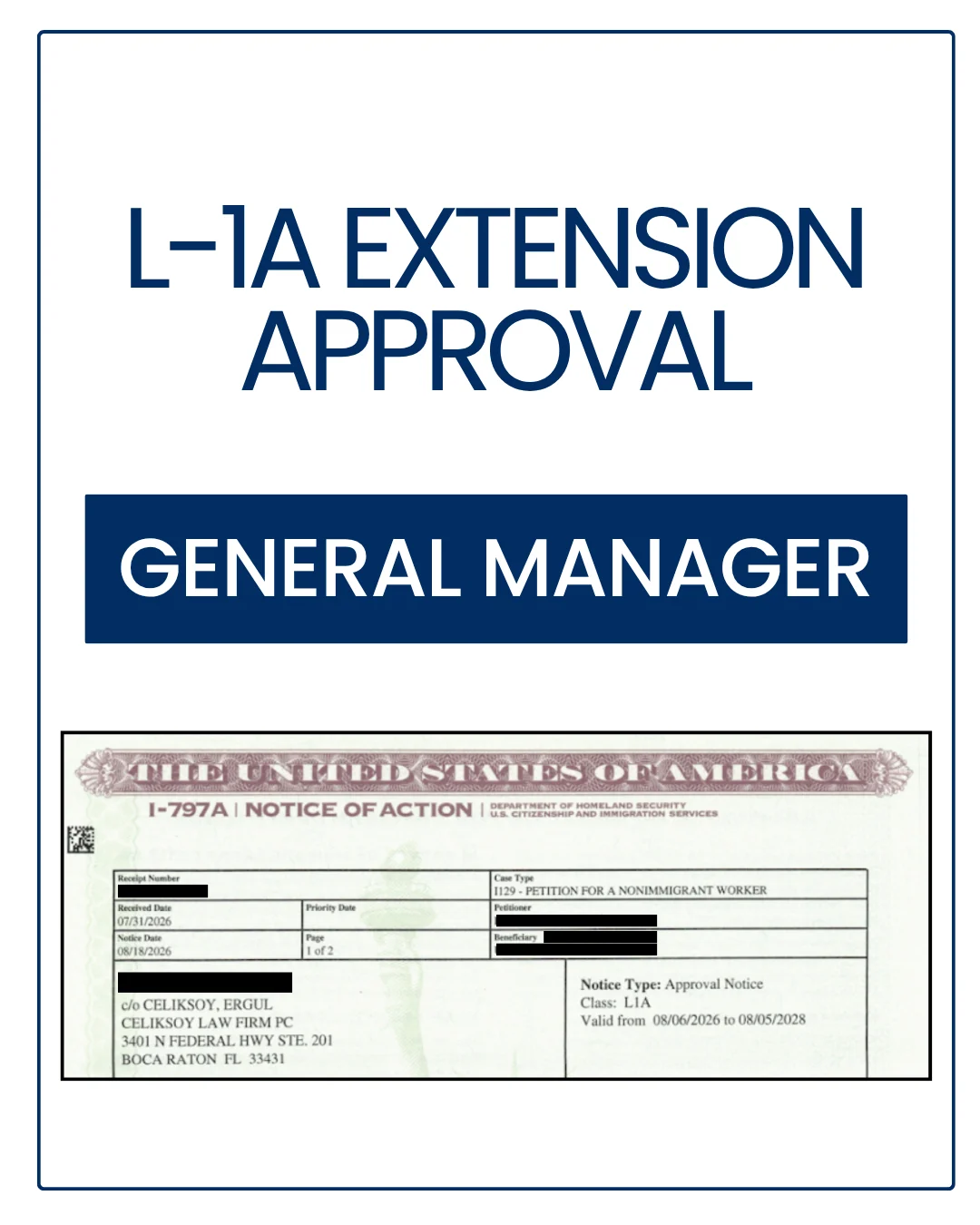
Celiksoy Law secured a two-year L-1A extension for the general manager of a Georgia furniture and home décor business affiliated with an established Turkish company. The petition brought together the US business’s operating record, its staff structure, and examples of the manager’s authority over hiring, finances, and expansion.
Following the initial L-1A approval, the business had developed its showroom sales, maintained warehouse operations, and broadened its furniture and interior design offerings. The extension case explained how those activities were managed, how responsibilities were distributed among staff, and why the general manager remained necessary to the company’s continued development.
An operating furniture business with a broader commercial offering
The US company imported and sold furniture and home improvement products to residential and commercial customers. Its offering included furniture collections, custom closets, cabinetry, wall panels, and decorative glass products, alongside customized interior design solutions.
This business model involved several connected functions: international purchasing, inventory planning, showroom sales, customer consultations, product customization, and delivery coordination. The general manager’s responsibilities therefore extended across the supply chain and the company’s commercial operations.
Customer invoices documented ordinary furniture sales, while supplier invoices included purchases from the Turkish affiliate. A project-based commercial agreement also illustrated the broader scope of the company’s offering, covering design, production, shipping, and installation services. These records gave the petition a concrete account of what the business sold and how it worked with customers and suppliers.
Sales, staffing, and expansion since the first approval
The extension filing documented progress through financial statements, a federal partnership tax return, bank records, employment materials, and commercial premises documents. The tax return and profit and loss statement reported sales revenue and a positive business result for the completed financial year. Customer and vendor records provided additional context for those figures.
The company also documented its existing showroom and warehouse arrangements and a lease for an additional showroom. At the time of filing, the newly leased location had not yet reached full operation. A move to a larger warehouse remained under negotiation, and additional recruitment was planned as the business expanded.
The petition distinguished those plans from the operations and staff already in place. Its growth summary addressed the difference between earlier forecasts and actual staffing and revenue, explaining the effect of the delayed showroom opening and warehouse capacity constraints. That account connected the business’s progress with the practical decisions the general manager would continue to oversee.
Managerial authority demonstrated through business decisions
The general manager directed strategy, financial oversight, purchasing, personnel decisions, and product development. The current organizational chart placed a director below him, with reporting roles covering sales management, human resources, sales and marketing, and warehouse and delivery work.
The detailed job description explained how his time was allocated across these responsibilities. Employment records and payroll materials added context to the organizational chart. Together, these documents described the structure through which he supervised the business and assigned operational responsibilities.
The petition also included examples of his authority in practice. Human resources correspondence sought his approval to onboard a senior sales manager, followed by his authorization to proceed. A lease approval memorandum presented proposed showroom terms for his review. A separate instruction directed the preparation of rent and deposit payments.
A sales performance report submitted by the director requested approvals relating to employee orders and additional hours. These examples connected the managerial role to personnel supervision, commercial commitments, and financial decisions. They made the account of his responsibilities more specific than a job title or an organizational chart alone.
Ownership changes and the continuing Turkish affiliate
The US company’s membership interests had changed since its formation and initial L-1A petition. The extension filing documented those transfers and explained the general manager’s continuing majority ownership and control of both the US and Turkish entities.
The ownership history was supported by membership transfer agreements and foreign corporate records. This addressed the relationship between the two businesses as it stood at the extension stage, including changes that had occurred during the approved assignment.
The Turkish business also had its own operating evidence, including corporate tax returns, financial records, invoices, and manufacturing materials. An employment verification letter, departmental organizational chart, subordinate employment contracts, and personnel correspondence supported the account of the applicant’s management background abroad. The petition therefore considered both the company relationship and the business activity underlying it.
The evidence and its role in the petition
| Evidence group | Role in the petition |
|---|---|
| Ownership history, membership transfer agreements, and Turkish corporate records | Documented the evolving US ownership structure and supported the continuing affiliate relationship. |
| Showroom and warehouse leases, premises photographs, and business materials | Described the physical facilities supporting the business and the additional showroom expansion. |
| Customer invoices, supplier invoices, and commercial agreements | Illustrated actual sales, sourcing, and the scope of the company’s commercial offering. |
| Federal tax return, profit and loss statement, balance sheet, and bank records | Documented the US business’s reported financial activity and resources. |
| Growth summary and employment records | Explained staffing development, earlier projections, and the distinction between existing operations and planned expansion. |
| US organizational chart, detailed duties, payroll materials, and employment tax forms | Supported the account of the staff structure and the general manager’s place within it. |
| Hiring correspondence, lease review memorandum, payment instructions, and performance report | Provided examples of personnel authority, commercial review, and financial oversight. |
| Turkish employment verification, departmental chart, subordinate contracts, and personnel correspondence | Supported the applicant’s management background and supervisory responsibilities abroad. |
| Statement explaining the continued need for the general manager | Connected his role to ongoing operations, sourcing coordination, and the next phase of expansion. |
A two-year extension to continue directing the business
USCIS approved the I-129 petition and the accompanying request to extend the general manager’s L-1A stay for a further two-year petition period. The approval allowed him to continue serving the US company in the position described in the petition.
This case shows how an extension story can bring together commercial activity and the structure supporting a managerial role. Sales and premises records explained the business’s operations; staffing and decision records explained how the general manager led them. The ownership evidence addressed continuity across the US and Turkish entities as the business developed.
For companies preparing an extension, Celiksoy Immigration Lawyers can assess the relationship between operating records, staffing, and the manager’s responsibilities. Explore our L-1A services or contact our team to discuss your company’s position.