Our client developed a career connecting cardiovascular patient care with research into the biological mechanisms of heart disease. His background combines specialist training in cardiology with a Ph.D. in bionanotechnology engineering, clinical research training through Harvard Medical School, and advanced postgraduate studies in heart failure through the University of Zurich and the European Society of Cardiology. With more than 130 scientific publications, he built a research record spanning cardiovascular biomarkers and potential applications of nanotechnology in medicine.
Our firm prepared his EB-1A petition around the significance of his scientific contributions and the recognition he had earned within cardiology. We highlighted research examining circulating microRNAs as potential diagnostic and prognostic biomarkers in heart failure and acute coronary conditions. His publications and citations were presented alongside research awards, professional fellowships, journal peer-review activities, media coverage, and supporting expert letters. Together, this evidence supported our argument that his achievements demonstrated sustained national and international recognition and extraordinary ability in his field.
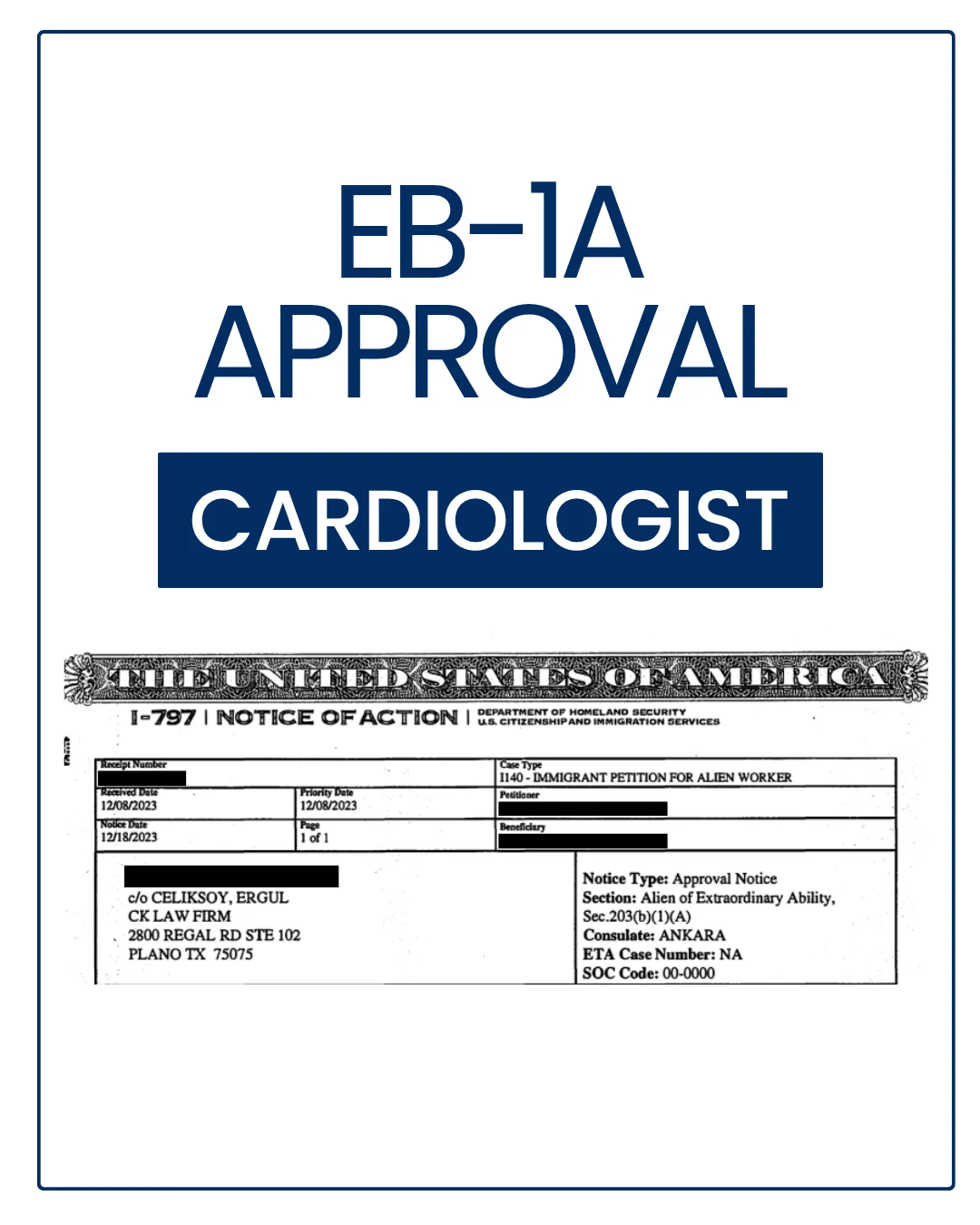
USCIS approved his I-140 petition under the EB-1A extraordinary ability category, marking an important milestone in his plans to continue his work in the United States. His stated goals include exploring applications of bionanotechnology in cardiovascular diagnostics, drug delivery, and tissue engineering. The case brought together his clinical expertise, research accomplishments, and professional recognition, presenting a distinctive career that connects cardiology with engineering-based approaches to medical research.