
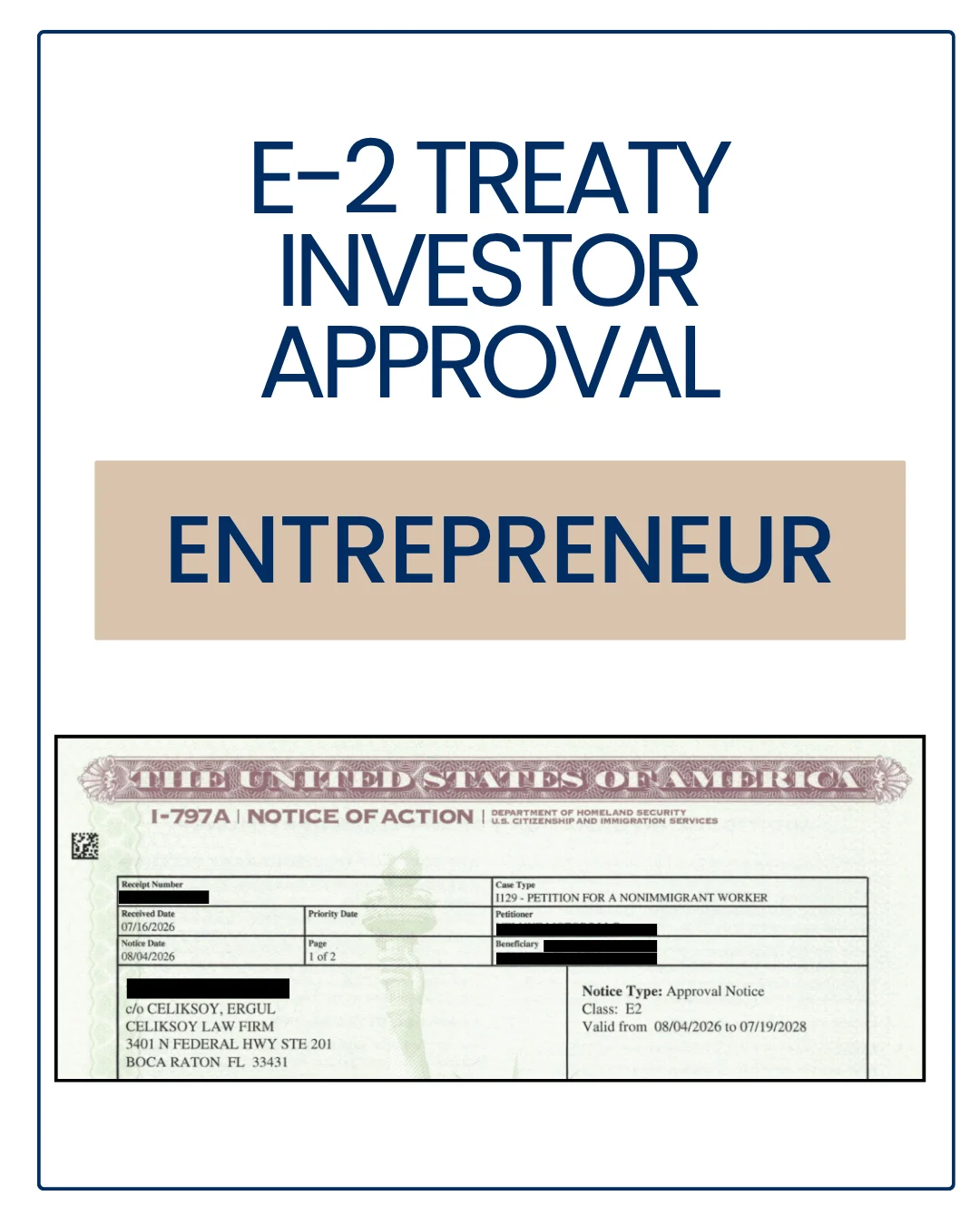
Celiksoy Law secured E-2 treaty investor status approval for an entrepreneur establishing a premium vehicle rental business in Florida. The petition connected proceeds from a property sale in Türkiye to international bank transfers, company vehicle purchases and an operating rental business using Turo.
This investment involved more than a straightforward purchase of a fixed fleet. One vehicle was initially acquired with financing and later traded for a replacement. The filing therefore needed to explain both the origin of the investor’s capital and how that capital moved through successive business transactions. Company ownership documents, customer reservation records and a growth plan completed the picture of the enterprise she intended to develop and direct.
A premium rental business with a defined customer market
The company was established to serve business and leisure travelers in Southwest Florida through premium sedans and SUVs. Its business plan focused on customers seeking a particular vehicle, convenient collection arrangements and responsive communication throughout their rental.
Turo was the business’s primary booking channel. Host and vehicle listing records showed how the company presented its fleet to potential customers, while reservation screenshots and guest messages documented customer interactions. The proposed operating model also included pricing decisions, vehicle preparation, maintenance coordination and fleet monitoring.
The petition described an enterprise built around commercial vehicle rentals, with the investor holding full ownership and management authority. Its presentation brought together the assets, customer-facing activity and management structure behind that business model.
Tracing property-sale proceeds into the business
The investment originated in the sale of real property in Türkiye. The source-of-funds presentation combined the sale agreement and title records with the buyer’s payment receipts, the investor’s Turkish bank statements, currency conversion records and incoming wire records for the company’s U.S. account.
The payment arrangement required careful explanation. Part of the purchase price had been paid, while another part was covered by a promissory note. A later payment under the same sale arrangement preceded an additional contribution to the U.S. company. The filing distinguished money actually received and transferred from the outstanding property-sale balance.
That distinction made the funding narrative more useful than simply stating the property’s total sale price. The documents allowed the petition to follow received funds through the investor’s accounts and into the company, then connect business payments to the fleet acquisition records.
The accompanying transaction summaries explained the sequence across currencies and banking systems. They provided a way to read the underlying records together, showing the relationship between the sale, the investor’s available capital and its deployment in the enterprise.
Documenting vehicle purchases and a fleet replacement
Vehicle acquisitions were central to the investment presentation. Purchase agreements, company checks, bank payment records and vehicle title documentation showed how the company obtained the assets intended for its rental operations.
One initial acquisition combined an investor-funded payment with vehicle financing. The company subsequently traded that vehicle for a replacement. The later purchase agreement recorded the trade-in allowance, the balance owed on the original vehicle and the additional payment required for the replacement.
Our firm presented the original purchase and replacement transaction as a connected sequence. The filing identified the investor’s payments, the financing component and the equity applied through the trade. This approach explained how the fleet changed without treating the original vehicle and its replacement as unrelated additions to the investment.
The vehicle records also included a dealer’s written explanation of an adjustment between a signed purchase price and the amount paid for another acquisition. Including that explanation helped connect the contract figures to the payment evidence.
Together, the documents tied the funding narrative to specific commercial assets. They supported the petition’s account of capital committed to a vehicle rental enterprise rather than leaving the investment story at the point of a bank transfer.
Turo reservations and customer coordination
The operating evidence included a Turo host profile, vehicle listings, booked trips and exchanges with customers. These records showed more than vehicles advertised for future rental: they documented reservations and practical arrangements associated with serving guests.
One set of messages addressed flight information, airport collection, pickup instructions and a change to the return time. The correspondence connected a booked rental to the company’s delivery and customer communication process. Other reservation records added context to the business’s initial booking activity.
The petition used these materials alongside the acquisition records to illustrate the company’s commercial operations. Fleet photographs, insurance documentation and records relating to vehicle monitoring and roadside assistance added information about the assets and supporting arrangements described in the filing.
These materials served different purposes. Purchase and payment records addressed the investment, while listings and reservation communications addressed customer-facing activity. Read together, they offered a fuller account of how the business was set up to make its fleet available to renters.
Ownership, management and planned growth
The investor owned the company in full. Formation records, the operating agreement, membership documentation and written company resolutions set out her ownership interest and managerial authority.
The business plan described her intended responsibilities across fleet acquisition, pricing, financial oversight, service providers and future staffing. It also addressed vehicle availability, rental preparation, maintenance and customer service as parts of the proposed management structure.
Educational documents recorded studies in public administration and business. They provided background to the investor’s profile, while the company documents and business plan supplied the more direct evidence of her authority and proposed role in the enterprise.
The growth presentation connected future revenue to fleet expansion and staffing. Employee onboarding documents were included in the filing, and the plan described further personnel needs as the business developed. Financial projections set out the proposed path for the company’s growth; the initial bookings and operational records supplied evidence of its position at the time of the petition.
This combination supported the petition’s argument that the company had a commercial direction extending beyond its initial setup. It explained the investor’s role, the assets available for rental and the business activities on which future development would depend.
The evidence and its role in the petition
| Evidence | Role in the petition |
|---|---|
| Company formation records, operating agreement, membership certificate and written resolutions | Established the ownership structure and documented the investor’s managerial authority. |
| Property sale agreement, title records and buyer payment receipts | Identified the transaction generating the investor’s funds and documented payments under that arrangement. |
| Turkish bank statements, currency conversion records and international transfer receipts | Traced received funds through the investor’s accounts toward the U.S. business. |
| U.S. company bank records and incoming wire details | Connected the international transfers to receipts in the enterprise’s account. |
| Vehicle purchase agreements, checks and bank payment evidence | Documented acquisitions and payments associated with the rental fleet. |
| Financing documents, replacement purchase agreement, payoff authorization and replacement payment record | Explained the original financing arrangement and the subsequent trade-in transaction. |
| Dealer correspondence concerning a purchase-price adjustment | Explained a difference between a signed vehicle agreement and the documented amount paid. |
| Vehicle title documentation, insurance records and fleet photographs | Supported the description of the vehicles and arrangements accompanying their acquisition. |
| Turo host profile, listings, reservation screenshots and guest correspondence | Documented booking activity and customer coordination, including airport collection and return arrangements. |
| Vehicle monitoring and roadside assistance payment records | Supported the description of arrangements intended to assist fleet operations. |
| Employee onboarding forms | Documented an initial staffing step included in the filing. |
| Business plan and financial projections | Presented the proposed operating model, management responsibilities, fleet expansion and staffing plans. |
E-2 approval
USCIS approved the I-129 petition and the accompanying change to E-2 treaty investor status. The approval enabled our client to develop and direct the enterprise in that classification.
The case brought together a documented funding source, a changing vehicle acquisition history and customer reservation evidence. Celiksoy Immigration Lawyers presented those records as a connected account of the investor’s capital, the company’s assets and its proposed business development.