
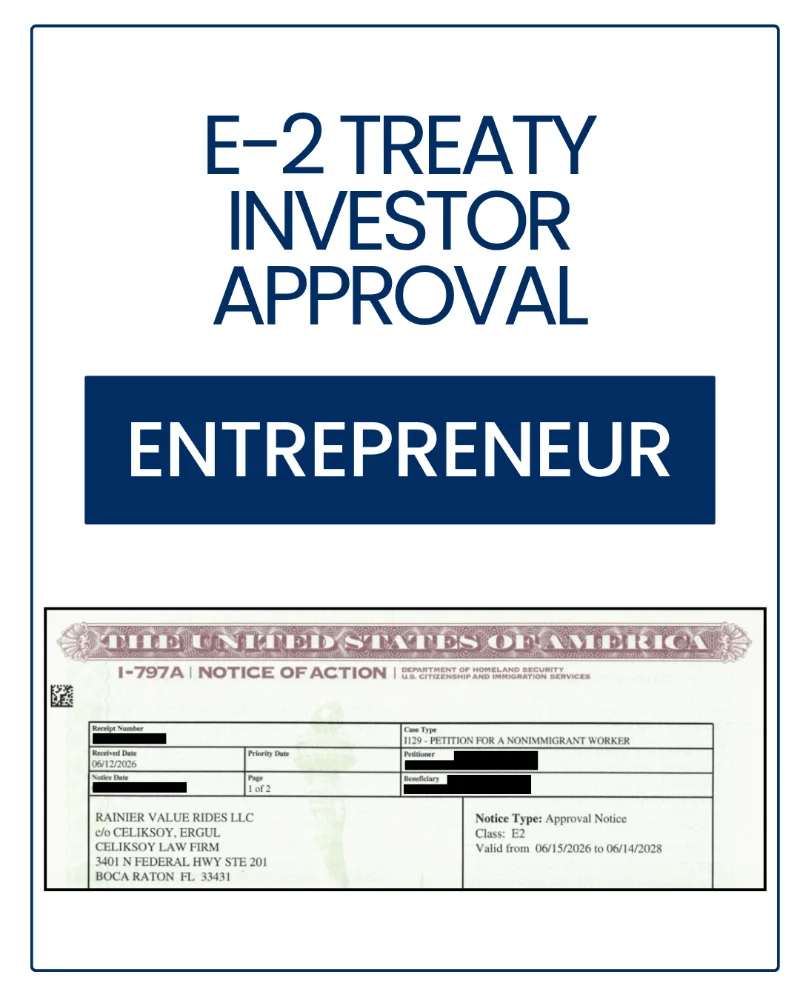
Celiksoy Law secured E-2 investor status approval for a Turkish entrepreneur who invested in a Washington car rental enterprise. The petition connected proceeds from a commercial property sale in Türkiye with the purchase of rental vehicles and evidence of the company’s actual business activity.
The company served the Seattle–Tacoma market through an owned fleet listed on Turo. By the filing stage, the records included completed rentals, customer feedback, platform earnings and payments deposited into the company’s bank account. Those documents gave the investment story a commercial context: the fleet had been acquired, offered to customers and used in revenue-generating transactions.
The petition also addressed the applicant’s controlling ownership, his proposed role in developing and directing the business, and a five-year plan for fleet expansion and future staffing. Its presentation brought together the funding history, the assets acquired and the business those assets supported.
A rental fleet serving different customer needs
The enterprise’s business model focused on vehicle rentals through Turo, with a fleet selected to serve several customer groups. Economy vehicles, a sedan, a compact SUV and passenger minivans provided options for local renters, visitors, business travelers and families.
This mix was relevant to the business plan because it explained how the company intended to reach different parts of the rental market. Vehicle choice, availability, pricing and customer coordination were all part of the operating model. The company’s assets were therefore presented alongside an explanation of the services offered and the customers it sought to serve.
The platform supplied a channel for listings and reservations. The business plan described the company’s own responsibilities for maintaining the fleet, coordinating vehicle access, monitoring bookings and managing service providers. That account connected the digital booking model with the practical work required to keep a rental fleet available.
From a property sale in Türkiye to U.S. business capital
The source-of-funds presentation began with a commercial property owned by the applicant in Türkiye. Title documentation, a sale agreement and related banking records supported the account of the sale and the receipt of its proceeds.
The transaction involved an initial deposit and later payments. The narrative identified how these amounts related to the agreement and where they appeared in the banking records. It then described the movement of funds through the applicant’s Turkish accounts before international transfers to the company’s U.S. account.
The U.S. business statement identified the incoming transfers and the applicant as their originator. This provided a direct record of the company receiving capital from him. The source presentation placed those receipts within the wider property-sale narrative rather than relying solely on the balance in the business account.
The distinction between the origin of the capital and its subsequent use was important. Property and banking records addressed the funding history; vehicle purchase and payment records addressed how the enterprise applied money to its business assets. Together, these sections explained the investment from two complementary perspectives.
Documenting the fleet acquisitions transaction by transaction
The petition’s use-of-funds section organized the vehicle purchases around the corresponding agreements, payments and vehicle records. The documentation included dealer transactions and acquisitions supported by offers to purchase and bills of sale.
For the initial SUV purchase, the records included a purchase order, a cashier’s check, a matching business-account withdrawal and a payment receipt. Other fleet acquisitions were documented with separate purchase records and a shared cashier’s check. Later purchases included dealer payment-processing records and a business-account withdrawal used for two vehicles.
These details helped explain how a single payment could relate to more than one asset. The shared transactions were linked to the individual purchase amounts, giving the use-of-funds narrative a structure that could be followed across the bank and seller records.
Vehicle title documents and temporary registration certificates supplied further evidence of the acquisition history. Insurance-related paperwork and state registration records formed part of the wider business record. The presentation distinguished the different types of documents rather than treating every item as proof of the same fact.
Completed rentals and payments to the business account
Operational evidence was a defining feature of this petition. The Turo materials included vehicle listings, trip histories, customer ratings and written feedback. They showed that customers had used vehicles from the fleet and left reviews of their rental experience.
The earnings dashboard separately displayed trip earnings and upcoming earnings. This distinction allowed the petition to describe completed activity and future bookings in their respective contexts. The business bank statements added another layer: they recorded payments originating from Turo and credited to the company.
Those account receipts helped connect platform activity with money received by the enterprise. Purchase records explained the acquisition of the vehicles; rental records showed customer use; and bank entries showed business receipts. Together, they documented successive parts of the operating cycle.
The evidence supported the presentation of an enterprise already participating in its market. Its scope remained specific: early rental activity and payments received at the filing stage. The five-year projections were presented separately as the company’s plans for future performance.
Controlling ownership and authority to direct the enterprise
The applicant held the controlling ownership interest in the company. The operating agreement, membership documents and a written member resolution supported his ownership and designation as managing member and chief executive officer.
The petition described the role he proposed to undertake as an E-2 investor through business-specific responsibilities. These included fleet acquisition decisions, budgeting, pricing strategy, financial oversight, vendor relationships and plans for future personnel. This made the management narrative relevant to a rental enterprise of its size and operating model.
The business plan also described local operational support from a U.S.-based co-owner. This supplied context for the company’s coordination arrangements while the applicant sought authorization to develop and direct his investment under E-2 status.
Growth forecasts linked to an operating business
The business plan addressed seasonal demand, rental pricing, vehicle utilization, maintenance, insurance, platform expenses and other operating costs. It proposed expanding the fleet over time and adding support personnel as the enterprise developed.
The petition used these forecasts to present the business’s anticipated earning capacity and future economic contribution. The staffing plan included fleet support and administrative functions, with future hiring tied to expansion. These were development plans, supported by the explanation of how the business was intended to grow.
Existing rentals and account receipts provided the starting point for that forward-looking presentation. The forecasts then described how additional vehicles, reinvestment and operational support could build on the company’s initial activity. This connection gave the growth narrative a foundation in the business already documented in the filing.
The evidence and its role in the petition
| Evidence reviewed | Role in the petition |
|---|---|
| Property title, sale agreement and related Turkish bank records | Supported the narrative explaining the origin and receipt of the investment funds. |
| U.S. business statement showing international transfers | Documented capital received by the company from the applicant. |
| Vehicle purchase orders, agreements and bills of sale | Identified fleet acquisitions and their transaction terms. |
| Cashier’s checks, business-account withdrawals and seller payment records | Connected the acquisition documents with payments and explained shared transactions. |
| Vehicle title documents and temporary registrations | Supported the acquisition and registration history within the scope of each record. |
| Insurance-related documents and Washington registration records | Supplied additional information about vehicle arrangements and the company’s state registration status. |
| Turo listings, trip histories and customer feedback | Documented vehicles offered for rental and completed customer activity. |
| Turo earnings dashboard | Distinguished recorded trip earnings from upcoming earnings. |
| Business bank statements showing Turo payments | Documented rental-related receipts credited to the company’s account. |
| Operating agreement, membership records and member resolution | Supported controlling ownership and the applicant’s designated management authority. |
| Five-year business plan | Presented the operating model, financial assumptions, proposed fleet expansion and future staffing. |
E-2 approval for the investment and business presented
USCIS approved the applicant’s E-2 investor petition and accompanying change of status. The case combined a documented capital contribution, vehicle acquisitions, an ownership and management structure, and evidence of completed rental activity.
For investors considering a car rental enterprise, this case illustrates how the funding history and commercial record can be presented together. The movement of capital, the purchase of assets, customer transactions and business receipts each contribute a different part of the investment narrative.
Celiksoy Immigration Lawyers advises entrepreneurs on preparing E-2 petitions and documenting U.S. business investments. To discuss your proposed enterprise, contact our team.