
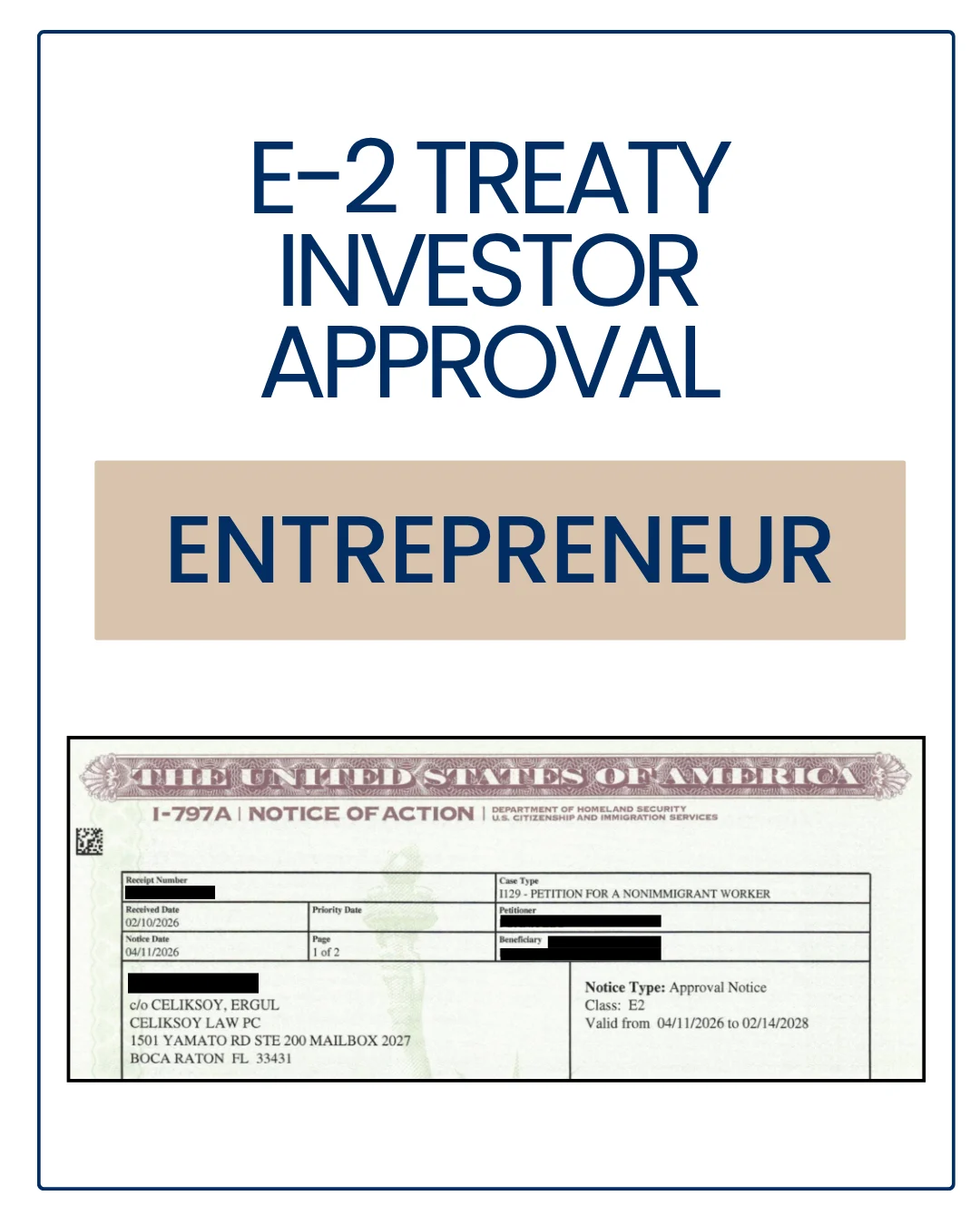
Celiksoy Law secured E-2 investor status approval for a Turkish entrepreneur who established a car rental business in Florida. The petition brought together the investor’s ownership of the enterprise, the origin and movement of its capital, the purchase of rental vehicles and a plan for developing the business.
The investment was funded through a gift from the applicant’s spouse, using proceeds from a property sale in Türkiye. The business acquired vehicles for its rental fleet and used Turo as a channel for making vehicles available to customers. These features gave the petition a concrete commercial foundation: an identifiable source of capital, documented acquisitions and an operating model tied to the company’s assets.
The central task was to connect those elements. Property records explained where the money originated. Banking documents showed how it reached the investor and the company. Dealer paperwork and payment records showed how part of that capital became the vehicles at the core of the rental business.
A rental business built around an owned vehicle fleet
The Florida enterprise was structured as a limited liability company wholly owned by the applicant. Its business model focused on short-term vehicle rentals, with a mix of vehicle types intended to serve different customer needs. The business plan identified visitors and local customers as potential sources of demand and described vehicle sharing through Turo as its principal booking channel.
For the petition, the fleet was especially significant because it connected the investment to the service the company intended to sell. The vehicles were revenue-generating business assets, and their acquisition could be examined through purchase agreements, dealer receipts, payment records and vehicle documentation.
Platform screenshots provided another part of the picture. They showed vehicles marked as listed, supporting the account that the company had taken steps to offer its fleet for rental. The petition also included payroll documentation and a business plan addressing operations, staffing and expansion. Each type of evidence described a different aspect of the enterprise’s development.
Tracing the capital from a property sale to the U.S. business
The investment funding originated with the sale of a property owned by the applicant’s spouse in Türkiye. The source-of-funds presentation connected the property transaction with bank receipts, currency conversion records and international transfers.
A signed gift declaration explained the relationship between the spouses and the terms of the transfer. It described the funds as an unconditional gift for the applicant’s investment in the U.S. enterprise, without an expectation of repayment or an ownership interest in exchange. This helped explain the applicant’s possession and control of the capital subsequently contributed to the company.
The banking records then followed the funds into the applicant’s U.S. personal account and onward to the company’s business account. This sequence was important because evidence of a property sale alone would leave the later movement of the money unexplained. Similarly, a balance in a U.S. business account would not, by itself, explain the origin of the deposited funds.
The petition presented these records as a connected funding trail. The source, the gift, the international transfers and the business contribution were separate transactions, each supported by the corresponding documents.
Connecting the investment to vehicle acquisitions
The use-of-funds presentation examined how company money was applied to the fleet. Buyer’s orders identified the vehicles and the terms of their acquisition. Bank records documented payments to the dealers, while receipts and vehicle paperwork supported the account of the purchases.
Some transactions required additional explanation. Payments to dealers could precede the final purchase documents, and one cashier’s check was allocated across two vehicle purchases. The petition’s narrative explained these arrangements and linked the shared payment to the corresponding balances. That detail helped make the records understandable without treating a repeated payment exhibit as a second expenditure.
The distinction between capital contributed and capital spent also mattered. Part of the funding had been used to acquire vehicles, while remaining funds were described as working capital for operating needs and future development. The vehicle purchases provided the clearest documented connection between the capital and the business’s core assets.
This approach allowed the investment to be discussed in the context of the enterprise being established: a vehicle rental business requiring a usable fleet, ongoing maintenance, customer coordination and financial management.
Ownership, management and plans for growth
Company formation and ownership records supported the applicant’s control of the enterprise. The petition described a proposed management role focused on developing the business, including fleet decisions, pricing, budgeting, service providers and staffing.
The applicant’s professional background included finance, investment and business management. That experience supported the account of his capacity to oversee commercial decisions, allocate resources and evaluate business performance. The presentation connected those skills to the needs of the rental enterprise.
The business plan addressed revenue assumptions, operating costs, fleet expansion and additional staffing. These projections formed part of the petition’s presentation of the business’s future earning capacity and potential economic contribution. Payroll documentation supplied a separate record of a staffing expense at the filing stage.
Keeping these records distinct made the story more precise. A vehicle listing documented availability through the platform; a pay stub documented a payroll entry; and financial projections described anticipated performance. Together, they supported different parts of the business narrative without turning forecasts into historical results.
The evidence and its role in the petition
| Evidence reviewed | Role in the petition |
|---|---|
| Company formation and ownership documents | Supported the existence of the Florida enterprise and the applicant’s ownership and control. |
| Property-sale documents and related bank records | Helped establish the origin of the funds used for the investment. |
| Signed spousal gift declaration | Explained the purpose and terms of the gift, including the absence of a repayment obligation. |
| Currency conversion and international transfer records | Connected the proceeds in Türkiye with the funds received in the United States. |
| Personal and business bank records | Traced the applicant’s contribution to the company and subsequent payments for business assets. |
| Vehicle buyer’s orders, dealer receipts and payment records | Supported the acquisition of fleet assets and explained how company funds were applied to purchases. |
| Vehicle title applications and registration documents | Supported the vehicle acquisition and registration history, according to the document available for each vehicle. |
| Turo listing screenshots | Showed steps taken to make vehicles available through the platform. |
| Employee pay stub | Documented a staffing expense included in the filing. |
| Business plan and applicant résumé | Presented the operating model, proposed development, financial forecasts and the applicant’s management background. |
E-2 approval grounded in the investment record
USCIS approved the applicant’s E-2 investor petition and change of status. The case brought together a family-funded investment, a documented vehicle acquisition process and plans for directing a Florida rental enterprise.
For entrepreneurs considering a similar business, the practical lesson is the value of a connected record. The origin of the money, the investor’s control of it, the company’s ownership, its asset purchases and its commercial plans each answer a different question. A clear petition explains how those records fit together within the particular business.
Celiksoy Immigration Lawyers advises entrepreneurs on documenting U.S. business investments and preparing E-2 petitions. To discuss your proposed investment, contact our team.